UX/UI Design for Complex Workflows and Technical Software
Neuron Alternative
Looking for a Neuron alternative with deeper experience in data-heavy tools and advanced workflows? Parallel gives you a dedicated product design team that understands technical software, interaction logic, and the edge cases real users face in complex systems.














Why Teams Choose Parallel as Their Neuron Alternative
Neuron focuses on UX services across many industries. Their model works well for structured research and general product improvements. But teams building technical platforms often need designers who work closer to the code, handle tricky data states, and move faster inside active release cycles.
Parallel gives you senior designers who specialize in dense interfaces and complex flows. We support engineering directly and help you ship meaningful updates on a steady rhythm.
Deep experience with technical products, not surface-level UX
Strong ability to design around data, permissions, and multi-step tasks
Direct collaboration inside your sprint cycles
Clear monthly pricing with no extra layers
Technical UX vs. General UX Services
Neuron brings a broad UX practice and structured methodology. Parallel focuses on solving the complicated parts: workflow clarity, data density, state handling, and the interactions that make or break technical software.
Direct access to the designers doing the work
No extra roles in the middle. Feedback reaches the people designing your interface right away.
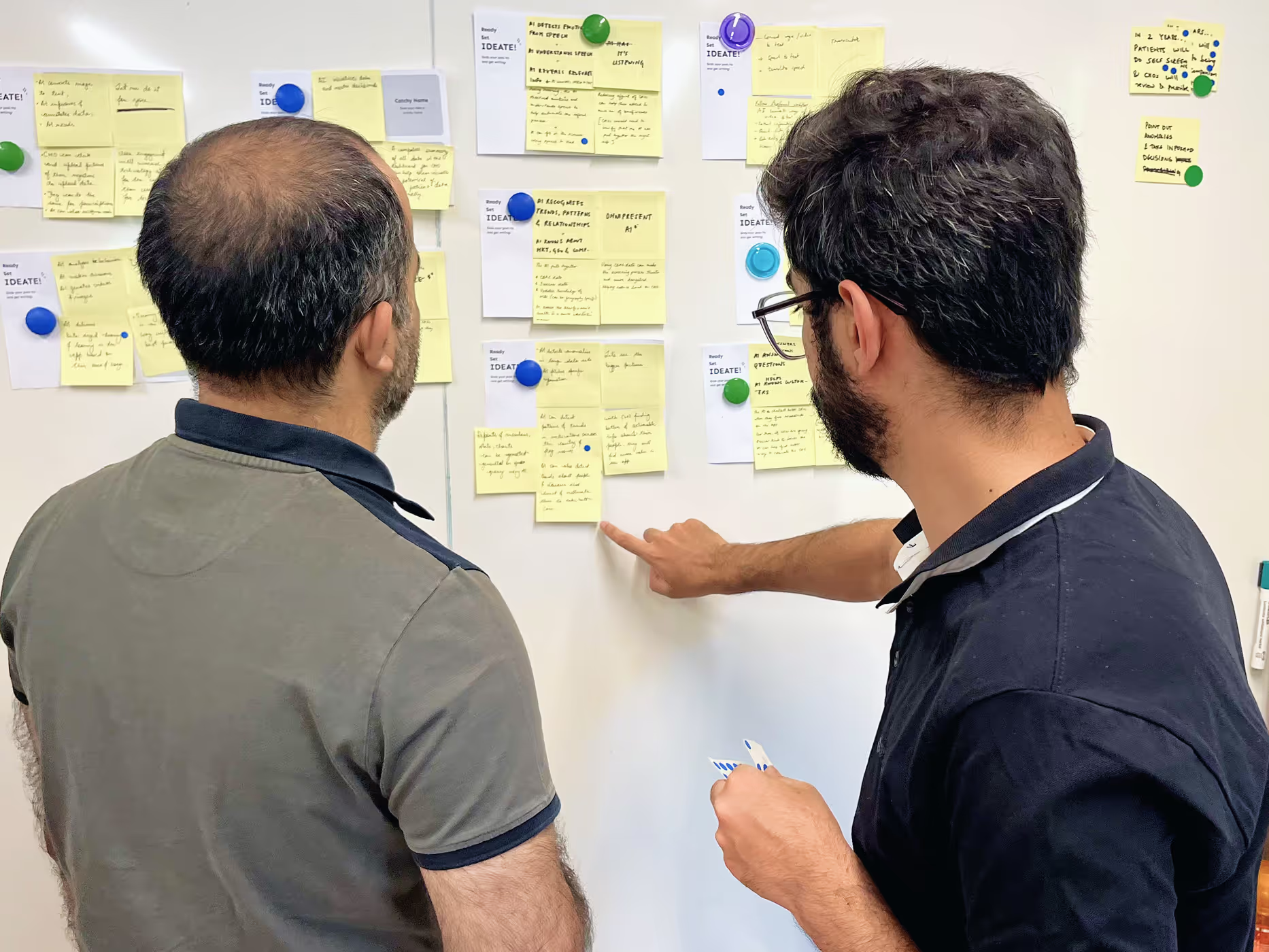
UX suited for complex tasks
We design dashboards, admin panels, multi-step flows, reporting screens, setup wizards, and feature-heavy SaaS tools.

Faster iteration
We design, prototype, test, and adjust in short loops instead of long research cycles.
How Parallel Improves Complex Interfaces
Parallel gives you a senior team used to working with engineers, PMs, and product ops on tools with many moving parts.
We review your product, friction points, and user signals. Within days, we begin improving flows, components, and interaction patterns.
Work happens in your Figma files. We refine screens, test ideas, and stay in sync with engineering so nothing slows down.
Design engineers help convert designs into well-structured components in React, Vue, or your current stack. That keeps engineering aligned and reduces rework.
Built for Technical Teams and SaaS Platforms
Complex software demands clear logic, stable patterns, and predictable user paths. Parallel is shaped around those needs.
We match your sprint timing and roadmap. Each update supports current product goals and user needs.
We build and maintain design systems that handle edge cases, variations, and high-density states.
We run usability checks, watch session recordings, and track friction to guide improvements that make daily tasks easier for your users.
Parallel designers understand constraints, responsive behavior, and how state handling affects UI and UX. That cuts down on back-and-forth with engineering.
Simple Engagement
Without Consulting
Overhead
Neuron’s structure is more traditional, with heavier research cycles and formal processes. Parallel stays focused on design that moves the product forward.
Your designers work only on your product during the engagement.
Start with a small team, expand when needed, and reduce when cycles slow down.
You pay for active design work, not research layers or process overhead.
Progress shows up in smoother workflows, better data clarity, and improved user activity.
“Parallel's design sprints allowed us to involve and engage all stakeholders in the project - even those with no product or design background, which was a big plus for us”


“Parallel made it a point to understand the product and the impact they have or should have. They worked patiently with our in-house teams of Product, Design and Engineering, without the slightest hint of friction.”


“Parallel was excellent in helping us bring our vision to life. The quick iterations done in parallel with user testing let us try a lot of things in order to get to our beta. We're so grateful for their team.”


“Finding designers who have the talent and drive to match a founder’s vision is rare, consider this a PSA! If you’re building B2B SaaS, you want them on your shortlist.”

FAQs
