Meta
Establishing trust, transparency and control in an AI-native world
Meta is building the next generation of AI wearables. To build products people trust, they need to understand how different markets feel about data privacy. We designed and ran design jams with industry experts to find out.

The vision
Surface honest expert opinion on AI privacy through design jams, before it shapes product decisions

AI wearables operate in spaces where privacy expectations have never been tested
Bringing together lawyers, policymakers, industry leaders, and academics in the same room captures the full spectrum of opinion on AI privacy. We gather opinions and encourage debate from those who write the rules, build the products, and study the consequences.

Our design jams start with simple scenarios that lower inhibitions and open up honest conversations about AI privacy
Each session opens with simple, relatable scenarios designed to get experts thinking about AI privacy in concrete terms before complexity builds. The goal is to surface instinctive reactions before participants default to their professional positions.
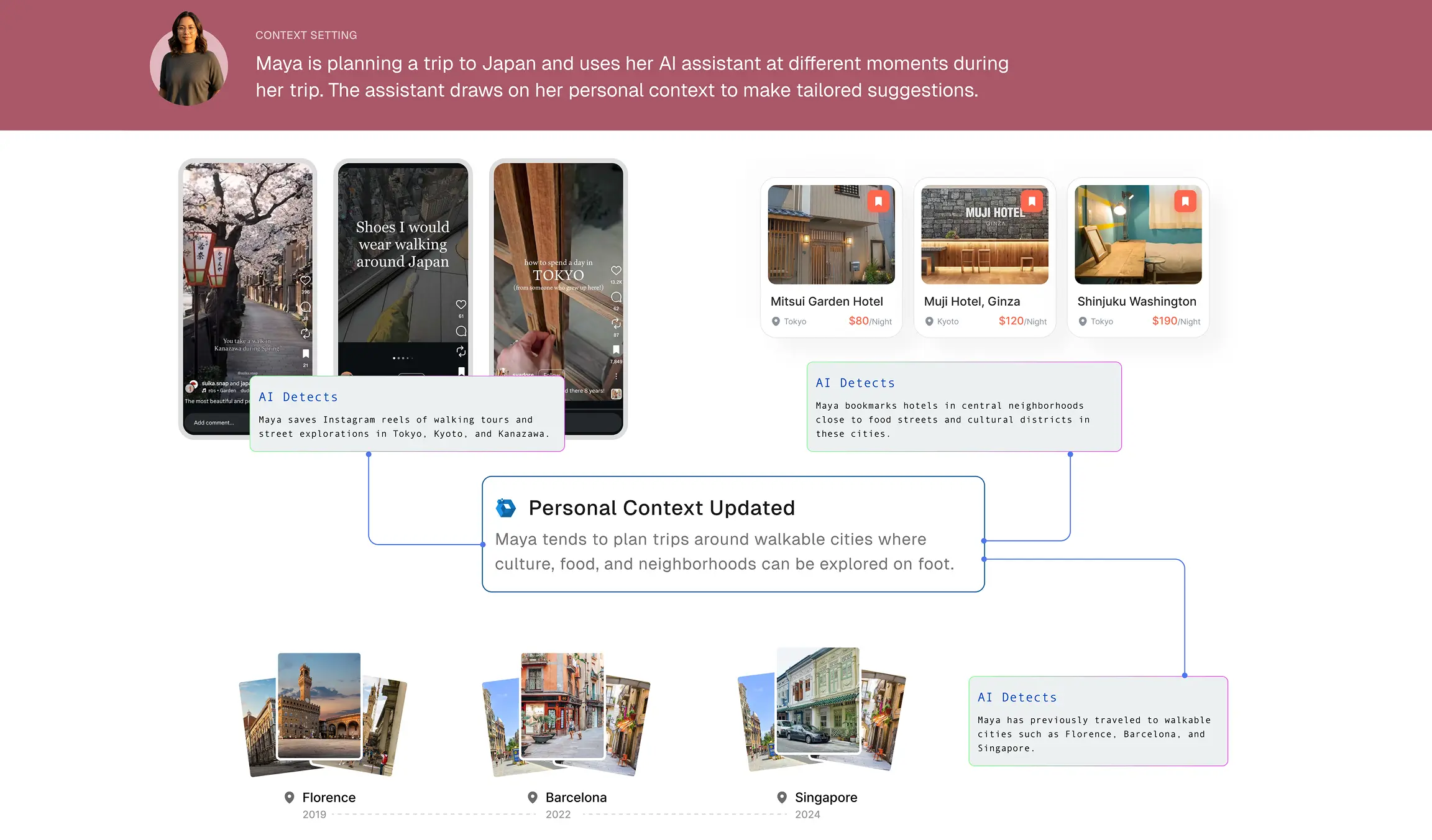
Layered scenarios facilitate discussion and debate where experts draw the line on comfort, risk, and consent
The scenarios start from situations where the value of AI seems undeniable. As overlapping constraints and edge cases are introduced and the scenario grows more complex, the conversation moves past "should AI exist here" to "how should AI behave here."

Personas, conversations, and scenarios are adapted to reflect market-specific insights on AI privacy in India
The global workshop structure is designed to be clear enough to run anywhere and flexible enough to adapt to any market. This allows us to ground scenarios in everyday Indian life so that expert responses reflect genuine local sentiment rather than reactions to scenarios that feel foreign or abstract.

Users want AI to augment their lives but only if they stay in control of it
AI that reduces effort and supports accessibility receives an enthusiastic response. The condition being that it acts on explicit user input rather than passive inference or automatic data capture. Trust is built when safeguards prevent AI from overreaching. Adoption follows when users feel in control.
The framework we built is now shaping how responsible AI privacy standards are defined across markets and cultures.