Stunning Website Design That Drives Results
Your website should be more than pretty — it should convert, engage, and grow. We blend brand storytelling, UX-first layouts, and performance-driven design to deliver sites users enjoy and business teams love.




What Sets Us Apart
We don’t just make things beautiful. We design with purpose — every element supports user flow, clarity, and conversion.
From wireframes to launch, we move quickly. You gain momentum, not endless back-and-forths.
Your site should evolve with you. We create scalable foundations—modular layouts, design systems, CMS flexibility.
How We Approach Website Design
Building a foundation on clarity and purpose
We begin by understanding who your users are, how they make decisions, and what goals your website needs to achieve.
- Stakeholder & competitor audit
- Brand voice, content mapping, and goal alignment
Designing the structure for smooth navigation
We plan how users move through your site so their path feels natural and intuitive from start to finish.
- Information architecture & navigation design
- User flows & wireframes
- Prototyping, concept validation, & early user testing
Creating a look and feel that brings your brand to life
Your site’s design reflects your identity while making every interaction feel intentional and satisfying.
- Visual design aligned with your brand identity
- Responsive layouts for all devices
- Micro-interactions, animations & visual polish
- Accessibility & performance optimization
Turning design into a living, high-performing site
We bring the design to life with reliable code, strong SEO foundations, and careful testing before launch.
- Front-end implementation (React, Next, Webflow, etc.)
- CMS integration, SEO fundamentals, tracking setup
- QA, cross-browser checks, and post-launch monitoring
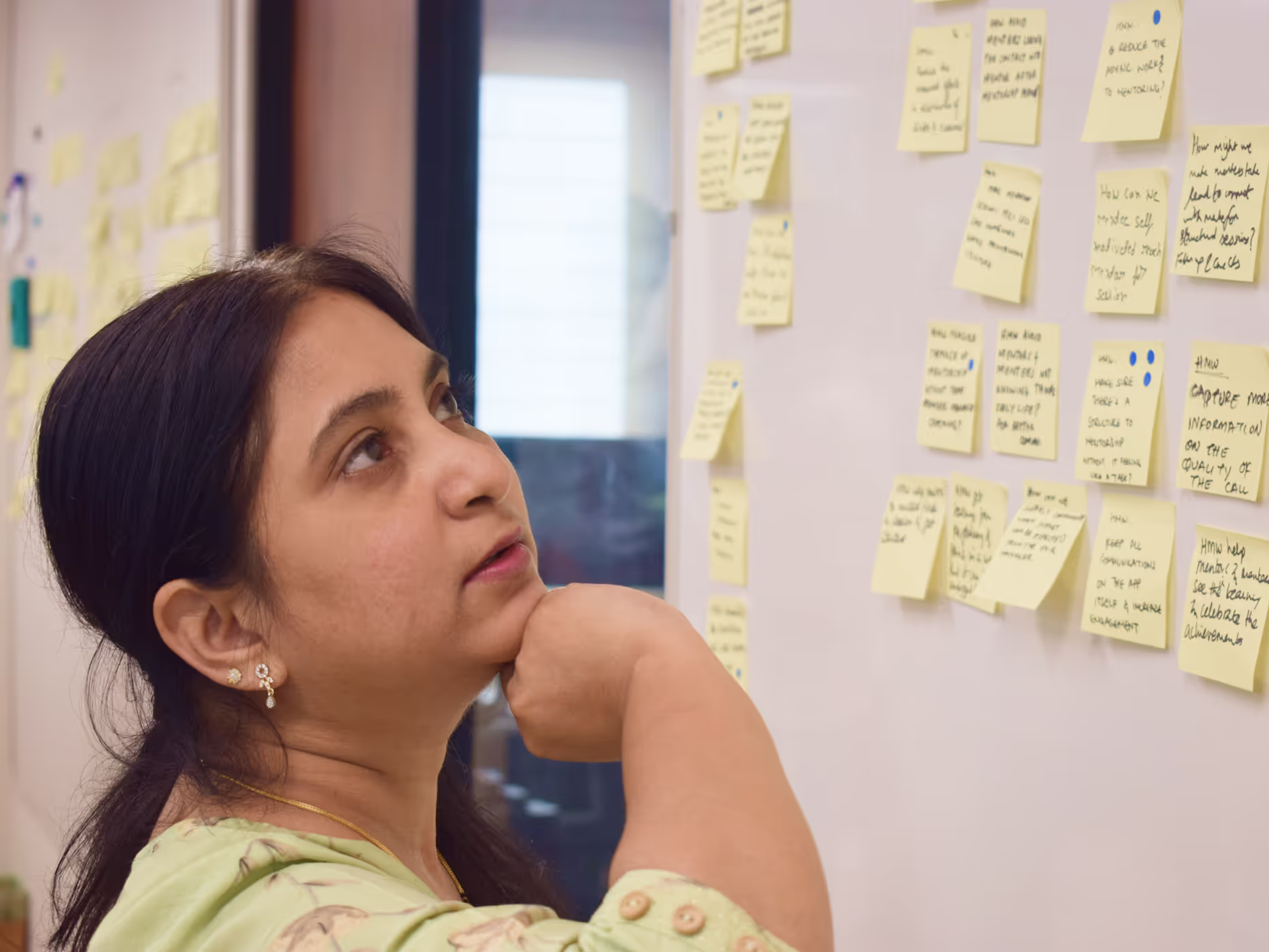
Website Design Process
Understanding the foundation
- Kickoff workshops & stakeholder alignment
- User research & market benchmarking
- SEO & content audit
- Success metrics & KPI definition
Creating the solution
- Information architecture & site map
- Wireframes & low-fidelity prototypes
- Usability testing & iteration
- High-fidelity mockups
Perfecting the details
- Front-end coding & CMS integration
- Performance & SEO tuning
- QA & cross-device checks
- Launch support & post-launch monitoring
Our Case Studies

Crafting a Landing Experience for AI SaaS
Their product was powerful, but the site failed to convey clarity and trust.
Designed a focused storytelling-led landing structure, with clear benefit flows and trust signals.
- 30% higher lead form submissions
- 20% reduction in bounce rate


Nailing Conversational SaaS Positioning
Their complexity made messaging and navigation confusing.
Introduced progressive disclosure, segmentation by user role, and simplified information pathways.
- 45% increase in demo requests
- 60% increase in content engagement

Streamlining Enterprise Web Presence
Multiple products, confusing navigation, inconsistent visuals.
Unified design system across subbrands, modular templates, and better navigation taxonomy.
- 50% drop in internal support queries
- 85% positive feedback from internal team
Our Tools & Methods
 FigmaFor collaborative design and prototyping
 FigJamFor workshops and ideation sessions
 PrincipleFor advanced interaction design
 MazeFor user testing and validation
 NotionFor documentation and project management
- Design SprintsRapid validation of concepts
- User InterviewsDeep qualitative insights
- Usability TestingValidation and optimization
- Analytics ReviewData-driven decision making
- A/B TestingPerformance optimization
“Parallel revitalized our website — what was a clunky, confusing site is now a polished, high-converting home for our brand.”

“They understood both design and how our marketing team thinks. Their handoff was clean, code-ready, and easy to build from.”


“Our bounce rate halved, leads doubled, and the design fits seamlessly with our product feel. Couldn’t be happier.”

Why Choose Parallel for Website Design
We’re not just visual designers — we understand content, development trade-offs, SEO, and growth.
Our clients see measurable uplifts in leads, engagement, and retention after a redesign.
We work as an extension of your team — full transparency, shared ownership, and fast feedback loops.
You’ll get modular layouts and robust systems so your site can grow without spontaneous rebuilds.
We’ve been featured around the world







FAQs
