We reviewed the leading web design company new york choices. We analyze portfolios and reviews to help you decide. Check out the rankings now.
I have seen founders waste crucial runway working with the wrong design partners. They get handed beautiful mockups that completely fail to solve real user problems. When you look for a web design company in New York, the sheer volume of options makes it incredibly easy to make a bad bet. You do not just need a site that looks good. You need an interface that converts, onboarding that actually works, and a user experience grounded in reality. After years of helping startups fix overcomplicated products, I know what separates surface-level agencies from true product partners. Here is how you should think about hiring a team this year.
The best web design company in New York depends on your goal. Choose ParallelHQ for product design and UX strategy, Work & Co for digital products, or Lounge Lizard for traditional corporate website builds.

Founders often treat web design as an art project rather than a business problem. They hire a web design company in New York based entirely on flashy portfolios full of trendy animations. The result is almost always a website with overcomplicated product experiences, weak onboarding, and terrible activation metrics.
We have seen this exact scenario play out repeatedly. A seed-stage startup raises capital and wants to make a splash. They hire an agency that prioritizes aesthetic awards over user utility. The agency delivers a stunning, immersive site. Six months later, the founders realize their user activation rate is entirely flat. The site looks incredibly modern, but potential customers cannot figure out what the software actually does.
Good design is entirely about clarity. It is not about decoration. According to 2025 usability data from the Nielsen Norman Group, clean navigation structures and straightforward copywriting outperform complex, interactive layouts by a significant margin regarding task completion rates. Visuals absolutely matter, but they must serve the user journey first.
Before you even start interviewing partners, you need to conduct a thorough website audit to understand your actual baseline performance. If you do not know where your current users are dropping off, an agency cannot fix the root problem.


When you evaluate a potential partner, you must look far beyond their visual output. You need to examine how they actually think. You are looking for a thought partner, not just a pair of hands to execute your commands.
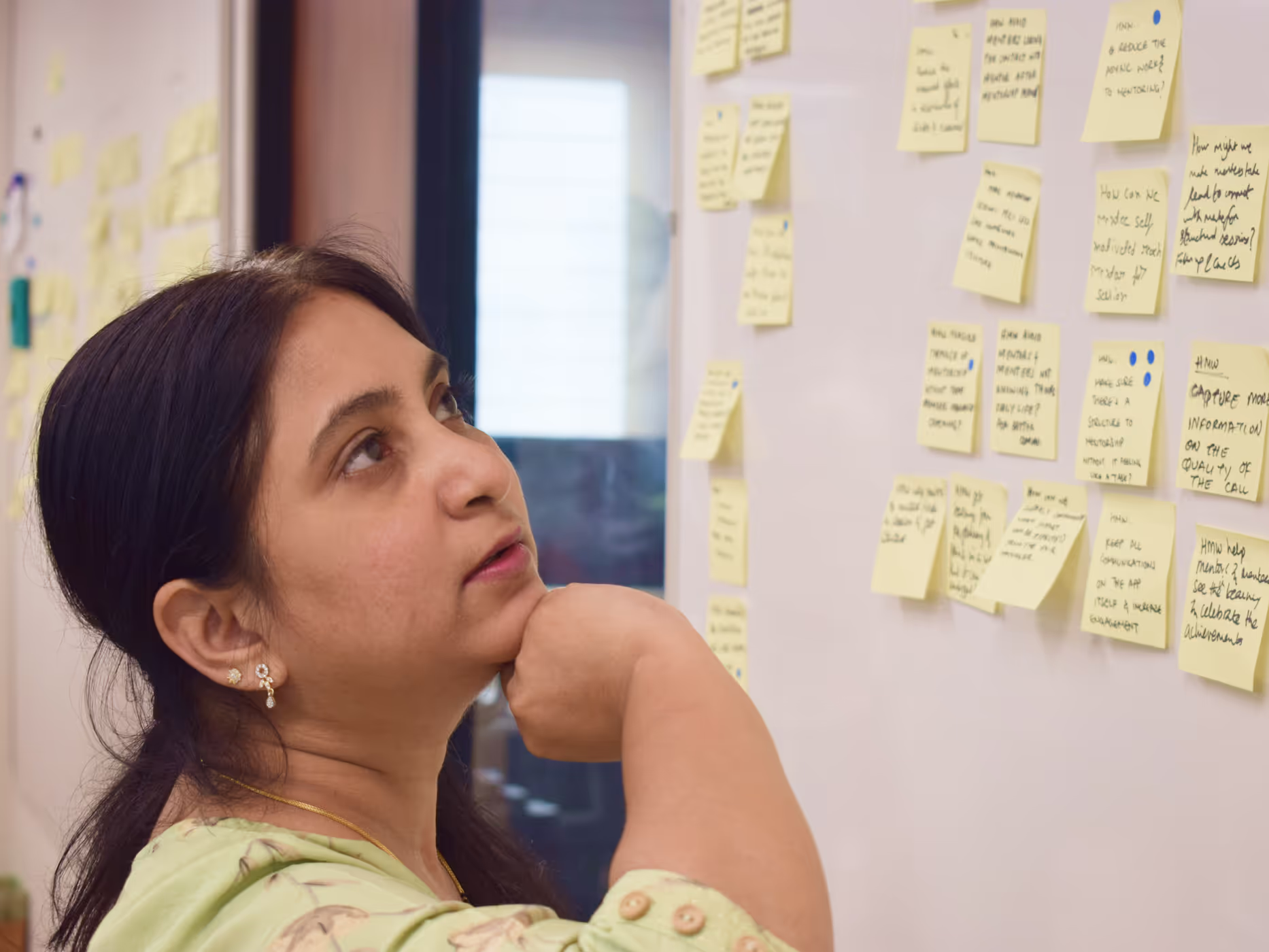
Ask them about their process for handling a design brief. Do they simply take your list of requirements and start drawing screens? Or do they push back, ask why, and challenge your underlying assumptions? A mature web design company in New York will refuse to build something they know will fail. They will insist on talking to your actual users before opening their design software.
Here is what we look for when collaborating with other teams:
The most successful product launches come from teams that prioritize testing incredibly early in the cycle. Teams that utilize regular usability testing see dramatically higher user retention. They catch massive structural issues before engineering writes a single line of backend code.
This list breaks down the top partners based on their specific strengths, working styles, and ideal client profiles.
We built ParallelHQ because we consistently saw a massive gap in the market. Many agencies deliver great visual work but completely fail at deep product thinking. We are a product design and strategy partner. We work closely with founders, product managers, and design leaders to simplify incredibly complex decisions.
If you need a team that focuses on clarity, structural thinking, and real user behavior rather than just making things look pretty, we are your best fit. We help early-stage startups turn messy, complicated ideas into structured, high-converting digital products. Our approach is grounded in rapid iterations and constant validation.
Work & Co has built a massive reputation for handling incredibly large-scale digital products. They focus strictly on pure design and technology execution. They purposefully avoid traditional marketing and advertising work. They embed deeply with client teams and are highly disciplined in their operational approach.
They are not the right fit for an early-stage startup looking for a fast pivot. They are designed for large companies that need serious digital transformation and have the budget to support a massive engagement.
Huge is a massive global agency with a foundational presence in New York. They handle absolutely everything from initial brand strategy to full-scale enterprise website deployments. They are a solid choice if you represent a Fortune 500 brand and need a highly structured, corporate-level engagement.
They have hundreds of employees and can tackle globally scaled problems. However, their sheer size means smaller startups might get lost in their account management layers.
Big Spaceship excels precisely at the intersection of modern brand building and digital execution. They do an exceptional job of translating a brand voice into interactive digital experiences. Their work is highly creative, visually striking, and heavily focused on cultural relevance.
If you are a consumer packaged goods brand or a lifestyle company looking to make a massive cultural impact, they are a fantastic option.
Lounge Lizard is a veteran New York web design firm with a deep history in the market. They specialize in traditional website design, corporate portals, and integrated digital marketing.
If you operate a traditional B2B service company, a law firm, or a local enterprise and need a standard, highly functional corporate website optimized for local search visibility, they are a deeply reliable option.
Blue Fountain Media focuses heavily on websites specifically engineered to drive direct marketing results. They seamlessly blend web design with digital marketing services like paid media, search engine optimization, and ongoing content strategy.
They are ideal for companies that view their website strictly as a lead generation engine and want a single vendor to handle both the design and the subsequent traffic acquisition.
Ruckus operates aggressively as a growth agency. They design websites with a strict, unrelenting focus on user acquisition and brand disruption. Their visual aesthetic is typically bold, loud, and designed to challenge industry norms.
If you are a disruptive startup trying to completely upend a stagnant industry, their bold design philosophy will likely align with your goals.
Momentum Design Lab is heavily focused on pure user experience and customer experience innovation. They excel particularly in complex industries like financial services, healthcare, and enterprise software.
When a project involves massive data visualization, complex user workflows, and deep security constraints, Momentum has the structural rigor to handle it effectively.
Beyond is a design and technology agency that creates thoughtful digital products. They possess a rigorous research methodology and focus heavily on user-centric design principles. They bridge the gap between pure product strategy and technical execution smoothly.
They are a strong choice for mid-market tech companies that need a mature approach to product development without the massive overhead of a global holding company agency.
Major Tom is a comprehensive full-service agency that effectively bridges the gap between web design and overarching marketing strategy. They are highly data-driven, focusing intensely on the entire customer journey from the first ad click to the final website conversion.
They excel in the e-commerce and retail sectors, where tracking the exact return on ad spend through a newly designed interface is absolutely critical.

Before you sign a contract with any external team, your internal house must be in absolute order. Agencies fail when founders fail to provide clear direction and decisive feedback.
You need to establish a single point of contact on your end. Design by committee will destroy any project timeline. You also need to define exactly what success looks like. Are you trying to increase demo requests? Are you trying to improve self-serve user onboarding? You must define these metrics clearly. Creating a detailed product roadmap helps align the external agency with your long-term vision.
Furthermore, you need to be prepared to hear things you do not want to hear. A great design partner will point out fatal flaws in your business logic. They will highlight areas where your pricing page is confusing or your value proposition is fundamentally weak. If you treat their feedback defensively, you will waste your entire investment. We regularly run heuristic evaluations that uncover hard truths about a client's product. Embracing that reality is the only way to improve.

When redesigning a product or website, you must track the right metrics. Vanity metrics like total page views or average time on site are largely useless for SaaS and complex digital products.
You need to track Time to Value. How long does it take a new user to experience the core benefit of your software? If your new design does not reduce this time, the design has failed. You should also be tracking feature adoption rates and your customer activation metrics.
A great design partner will help you set up this tracking framework before they even start designing. They will use product analytics to find exactly where users get confused. They will look for rage clicks and dead ends in your current interface. This rigorous, data-driven approach is what separates serious product builders from people who just draw pretty screens.
Choosing a design partner is fundamentally an exercise in risk mitigation. You are not just buying a new website. You are buying a team's collective ability to think critically about your core business model.
I always advise founders to look for a startup web app development company or a specialized design partner that acts exactly like a co-founder during the engagement period. They should care deeply about your long-term product strategy, not just hitting the next invoice milestone.
A genuinely reliable web design company in New York will welcome this intense level of scrutiny. It shows them you are a serious, professional client who cares deeply about real business results.
The stark difference between a failing product and a wildly successful one almost always comes down to clarity. Overcomplicated interfaces, convoluted pricing pages, and confused messaging kill promising startups every single day. As you decide who to partner with this year, you must prioritize clear, structured thinking over trendy visual aesthetics.
Find a team that asks uncomfortable questions, grounds every single decision in real user behavior, and focuses relentlessly on simplifying your product experience. The right partner will not just design your website. They will help you clarify your entire business trajectory.
A web design agency is a specialized team of professionals that plans, designs, and builds websites and digital products. They handle user experience architecture, user interface design, and often the technical development required to bring a digital product to the open market.
You should evaluate their previous work strictly for clarity and proven business results. Look for a web design company in New York that asks challenging questions about your users and your core business model, rather than an agency that just passively takes orders.
Costs vary wildly based on complexity. A basic marketing site might cost a few thousand dollars, while a complex SaaS platform or enterprise digital product can easily exceed six figures. You are paying for strategic thinking, problem validation, and complex problem-solving, not just the underlying code.
Web design typically focuses heavily on marketing sites designed primarily to inform or sell to a visitor. Product design focuses on interactive applications and software where users log in to complete specific, complex tasks. Product design requires a much deeper understanding of user workflows and long-term retention strategies.
A local team often provides vastly better cultural alignment and much easier communication for complex strategy and whiteboarding sessions. However, many successful startups effectively use offshore product development companies for technical execution once the core product strategy and design language are clearly and strictly defined.
A typical professional engagement is eight to sixteen weeks. This timeframe includes initial generative research, wireframing, high-fidelity UI design, and rigorous usability testing. Projects that skip the critical research phase are faster but carry a massively higher risk of total failure.
If you need a team to simply execute a predetermined visual concept without asking questions, we are absolutely not the right fit. If your product experience is currently overcomplicated, your onboarding is weak, and you desperately need a partner to bring deep clarity to your product decisions, ParallelHQ is exactly right for you.
If you are experiencing exceptionally low activation rates, high bounce rates, or users constantly misunderstanding your core value proposition, you absolutely need a redesign. A fantastic first step is tracking user activity on your website to see exactly where people drop off. An elite design agency will use this quantitative data to inform their entire strategy.