In 2026, a website is no longer just a brochure; it is infrastructure. For the startups and established firms I speak with daily, the quality of your web presence dictates your runway. Web design in Denver has shifted from aesthetic framing to product-led growth. Founders know that a confusing interface burns capital faster than almost any other oversight.
Denver’s tech ecosystem creates a specific pressure cooker for quality. With over 1,500 startups and 9 unicorns calling the city home, we aren't just competing locally. Our startups fight for global market share against the Valley and New York. This requires a partner who understands that design is a hypothesis we test, not just art we admire.
How to Choose the Right Web Design Partner
Selecting a partner is an exercise in risk management. You aren't buying a deliverable; you are hiring a brain trust to solve business problems. Here is what matters.
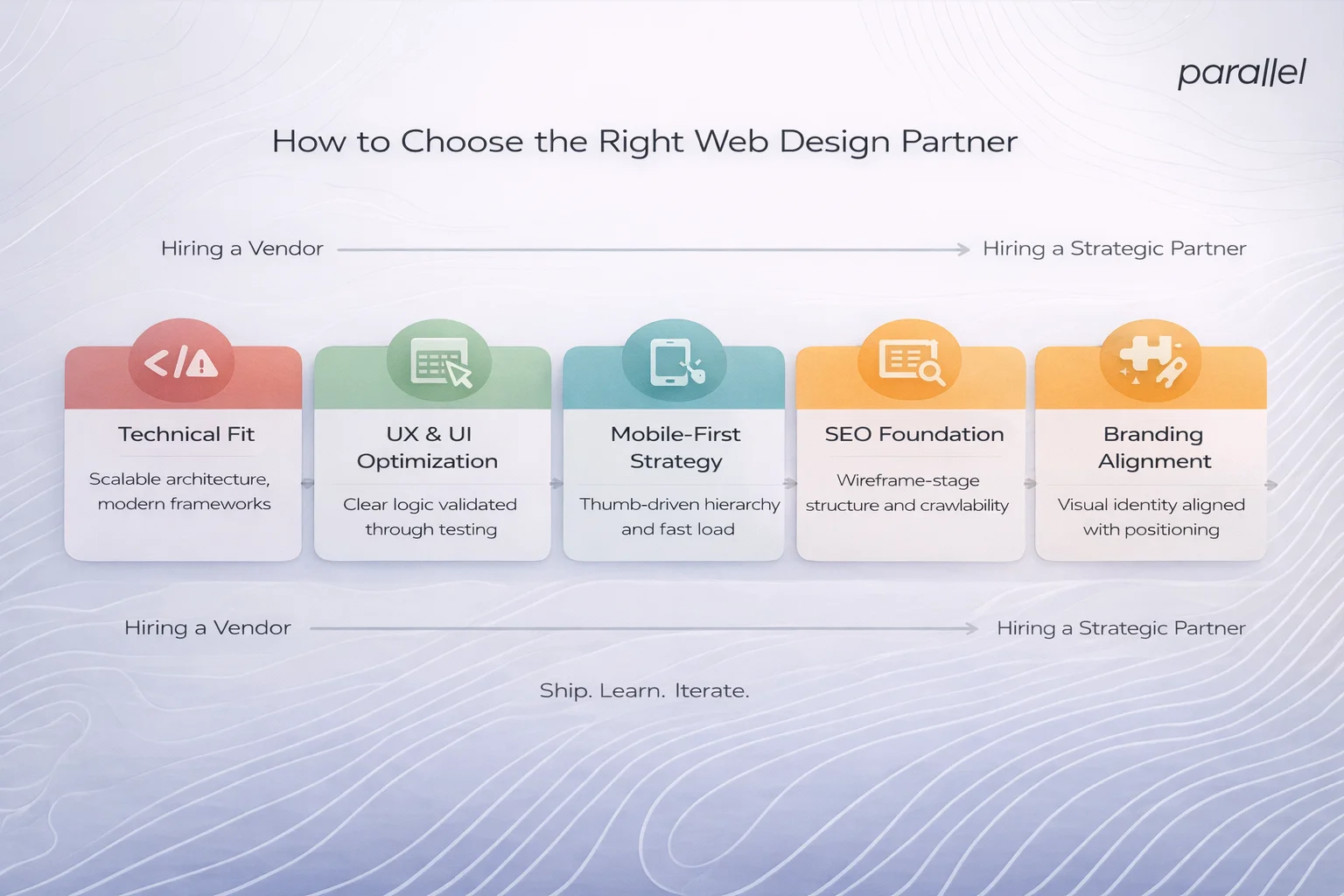
1) Website Development & Technical Fit
Many agencies can make a Figma file look expensive. Fewer can translate that into a performant, scalable codebase. In my experience, the gap between design and engineering is where projects fail.
You need a team that understands modern stacks—Next.js, React, or headless CMS architectures. If they push a rigid template because it is easy for them, run. Your technical foundation dictates your marketing team's agility for the next three years.
2) UI/UX Optimization & User Experience Design
A pretty interface that confuses users is a liability. It is vanity. According to recent data, investing in UX yields a massive return; Forrester research indicates that every $1 invested in UX brings $100 in return.
When evaluating a partner, ask to see their wireframes, not just their finished pixels. Ask them how they validated their decisions. If they cannot explain the "why" behind a button placement, they are guessing.
3) Mobile-Friendly Design & Responsive Layouts
In 2026, mobile traffic will dominate B2B research phases, not just B2C shopping. Google’s recent updates punish sites that fail on interaction-to-next-paint (INP) metrics.
Responsiveness is not just shrinking a desktop site. It involves rethinking the hierarchy of information for a thumb-driven interface. Data shows that 53% of mobile site visitors leave a page that takes longer than three seconds to load. A partner must demonstrate a "mobile-specific" strategy, not just a "mobile-compatible" one.
4) SEO Strategies & Search Engine Ranking
Design dictates discoverability. I have seen beautiful sites launch and immediately tank in rankings because the designers used heavy client-side rendering that search crawlers couldn't parse.
Web design in Denver requires integrating SEO at the wireframe stage. This means planning heading structures, schema markup, and load speeds before a single color is chosen. Retrofitting SEO onto a finished site is expensive and rarely effective.
5) Branding Services & Visual Identity
Your brand is the promise you make; your visual identity is how you dress for the meeting. Startups often confuse the two.
A strong design partner aligns your visual language—typography, color, space—with your strategic positioning. 75% of users admit to making judgments about a company’s credibility based on their website’s design. If you claim to be an enterprise-grade security solution, but your site uses whimsical illustrations, you create cognitive dissonance. Trust is lost in that gap.
6) Interactive Features & Landing Page Design
Static pages are dead. Users expect feedback. When they hover, click, or scroll, the system should acknowledge them. This isn't about flashiness; it is about communication.
Interactive calculators, product configurators, and data visualizations keep users engaged. These elements increase time-on-site, a critical signal for search engines and a precursor to conversion.
7) Content Management System (CMS) Flexibility
Your marketing team should not need an engineer to fix a typo. The choice of CMS is a strategic product decision.
We often recommend headless solutions (like Sanity or Contentful) for scale, or highly customized WordPress instances for speed. The goal is decoupled architecture: your content lives separately from your code, allowing you to redesign the front end without migrating data later.
Top 10 Web Design Companies in Denver
The local market has matured. Here are the firms that define web design in Denver, ranging from product-led studios to full-service marketing agencies.
1. ParallelHQ — Product-Driven Craft
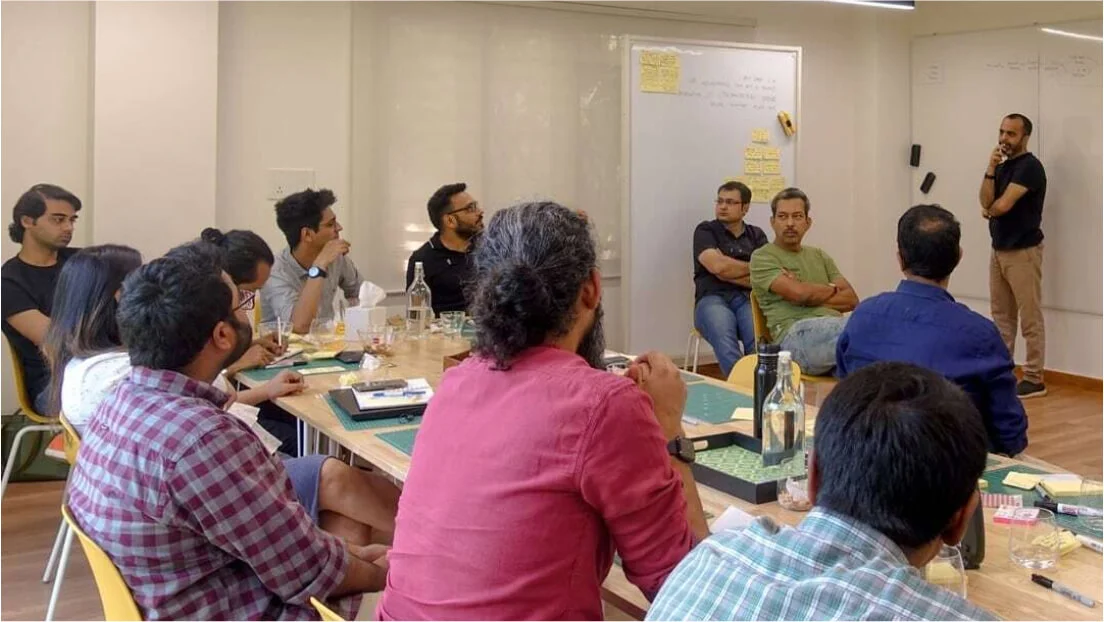
We sit at the intersection of product strategy and high-fidelity design. Parallel isn't a traditional agency; we operate like a product team that parachutes in to solve specific growth challenges.
Our focus is on the user. We build systems, not just pages. Whether it is a SaaS dashboard or a marketing site, we apply the same rigor: discovery, prototyping, and iterative UI design. We believe that design without strategy is just decoration. Our clients are typically founders and product leaders who need to move metrics, not just launch a site.
2. Tag Team Design — Strategy-Led Solutions
Tag Team has built a reputation for data-informed decisions. They are strong in the Denver market for integrating distinct strategy phases before visual work begins. They are a solid choice if you need a blend of consultation and execution.
3. Logics MD — Medical & SEO Specialists
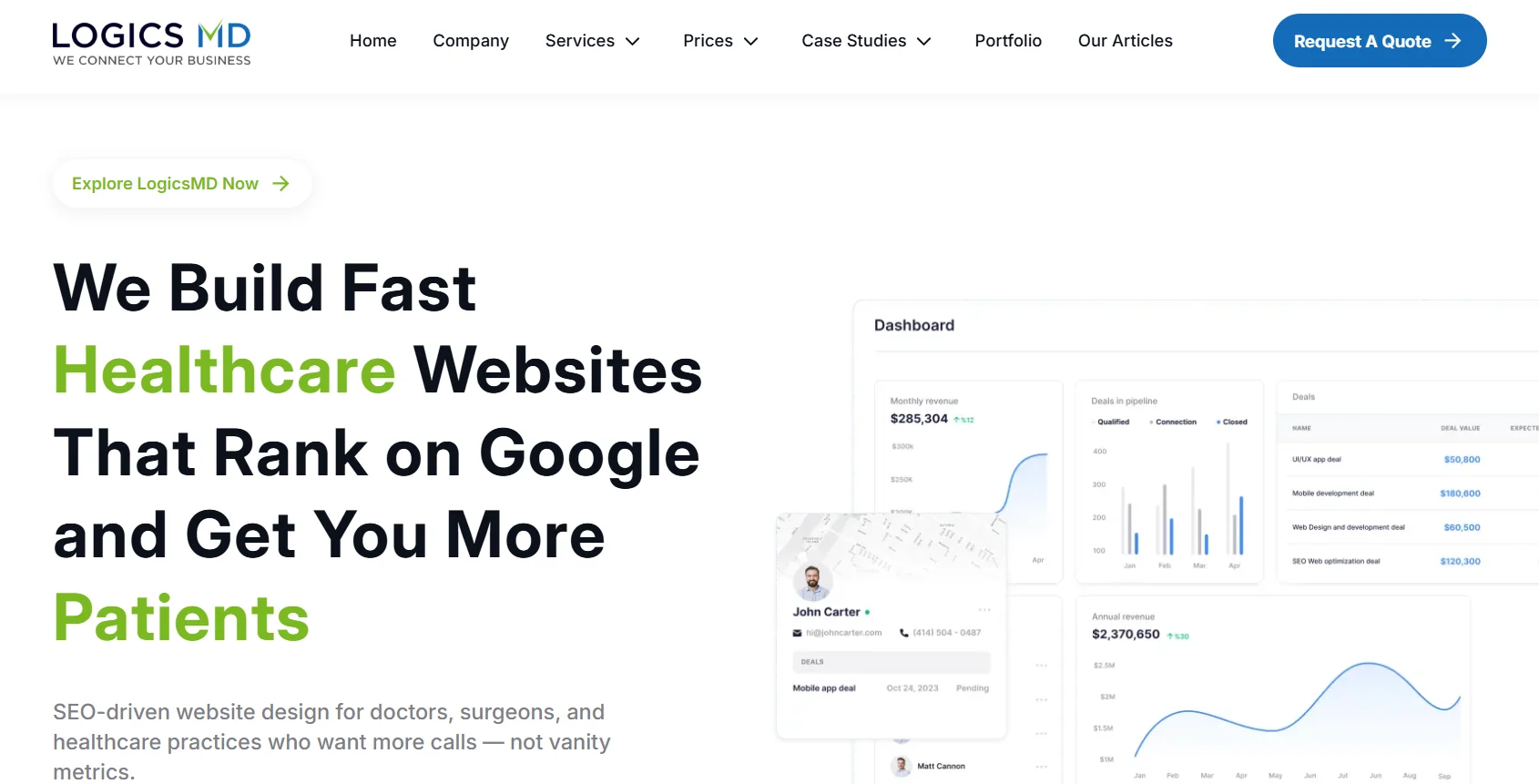
If you are in healthcare, Logics MD is a notable specialist. They have carved out a niche in responsive development for medical practices. They understand HIPAA compliance and the specific SEO needs of local clinics.
4. Lighthouse Web Design — Professional Services
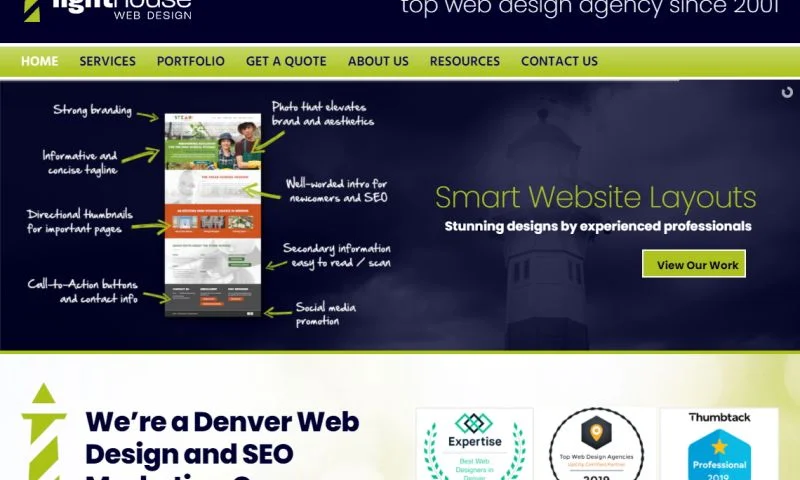
The lighthouse has been around for a long time. They offer reliable, professional design services. They are less about bleeding-edge tech and more about stable, customer-centric creative solutions for small to mid-sized businesses.
5. Big Orange Planet — Full-Service Agency
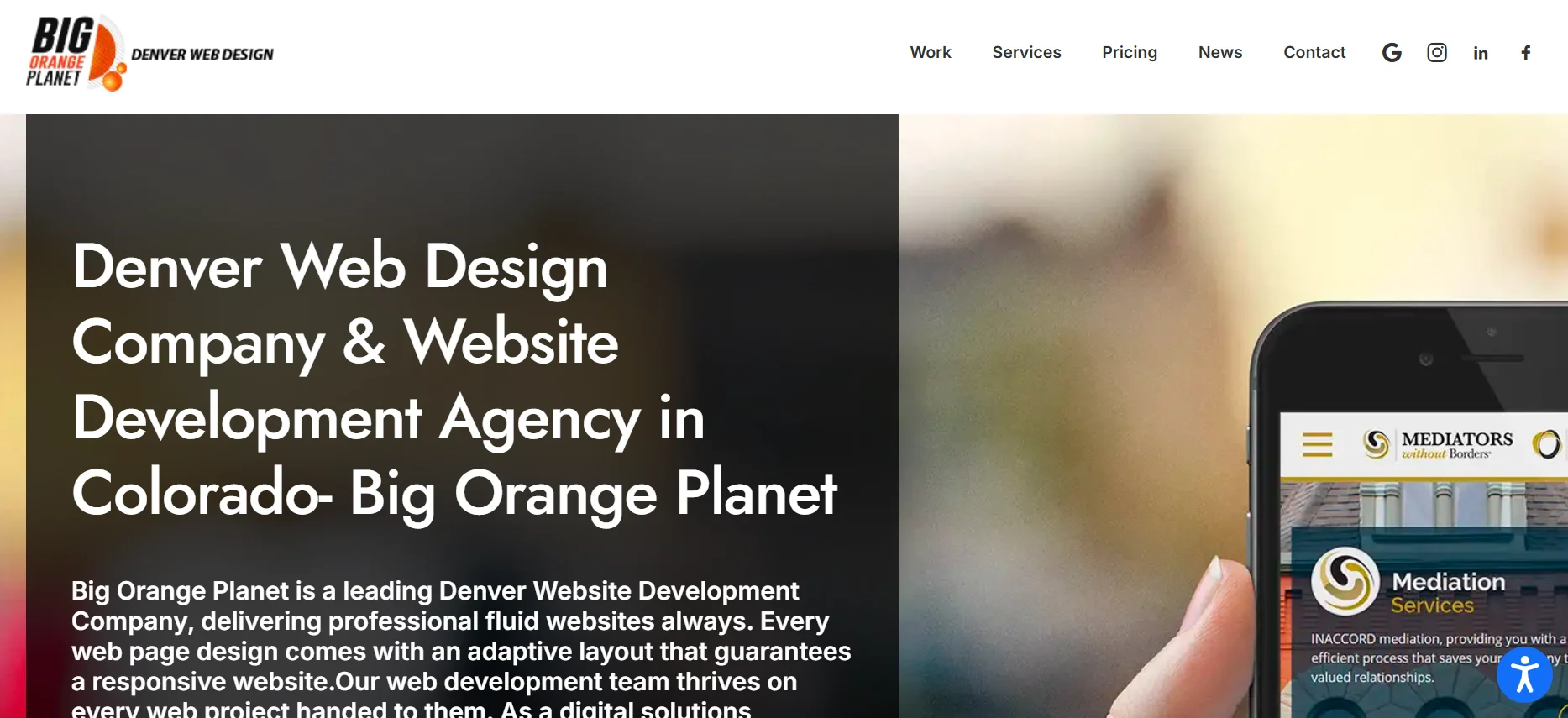
This team blends creative graphic design with backend development. They are a good fit for companies needing a "one-stop-shop" that includes print and broader creative work alongside their web presence.
6. Denver Website Designs — Marketing Integration
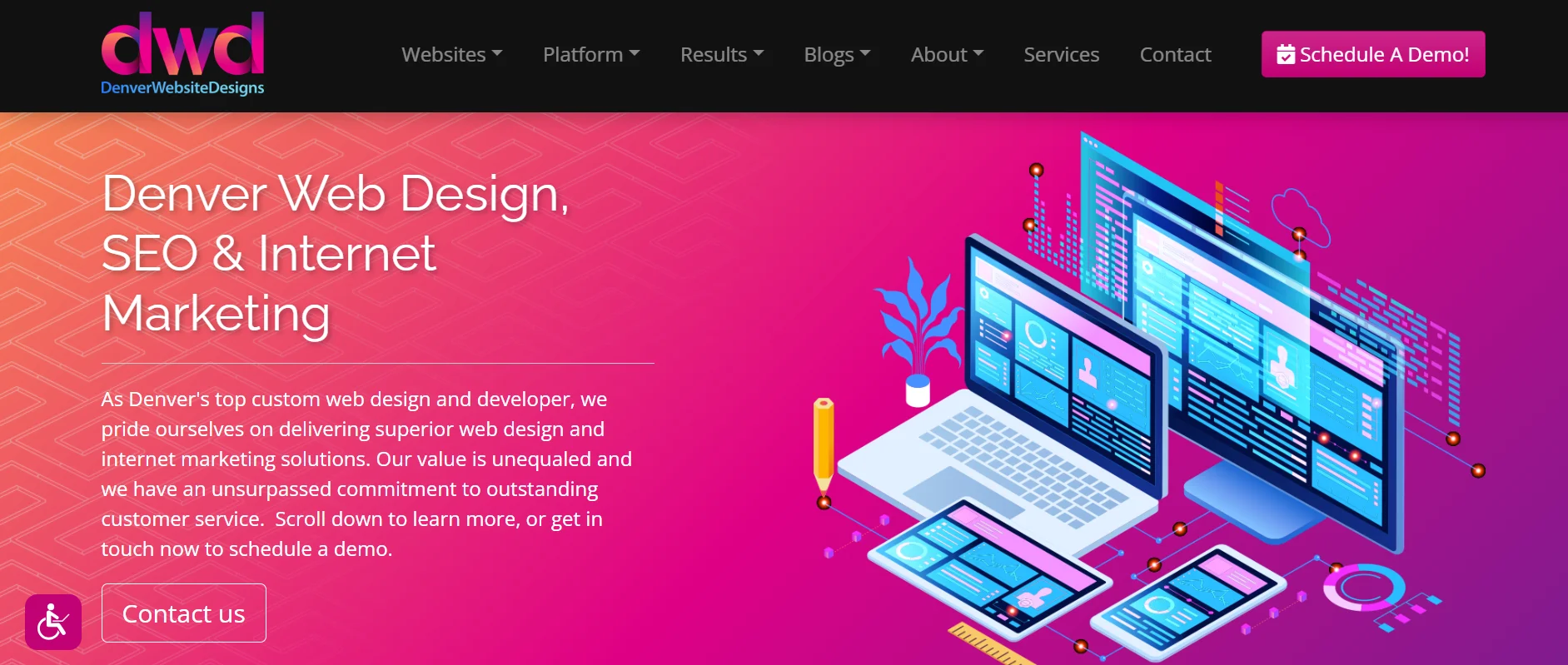
As the name suggests, they focus heavily on web design in Denver bundled with ongoing marketing. Their model suits businesses that want a single invoice for design, hosting, and monthly SEO/marketing management.
7. Sitewired Web Solutions — Technical SEO Focus
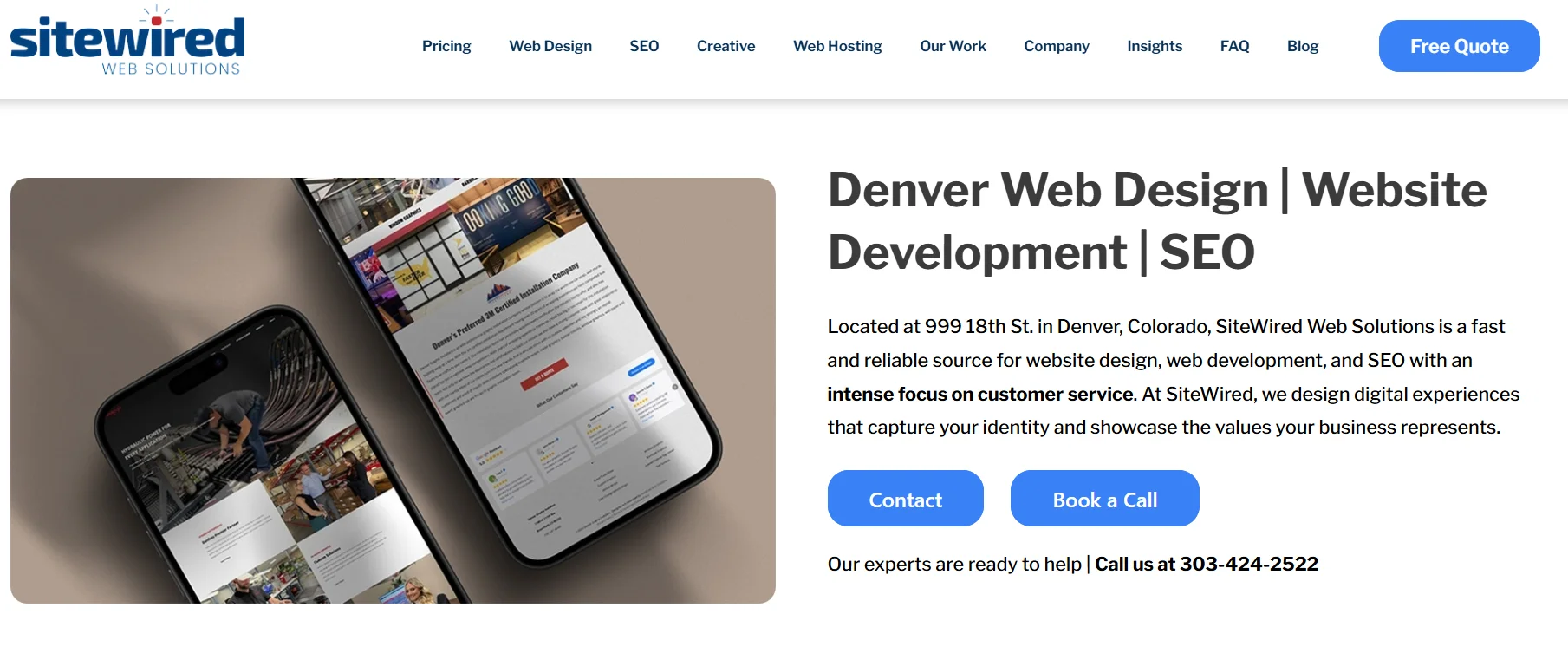
Sitewired combines design with deep hosting and CMS expertise. They are technically sound and focus heavily on the infrastructure side of the equation to ensure search outcomes are positive.
8. Denver Web Success — End-to-End Support
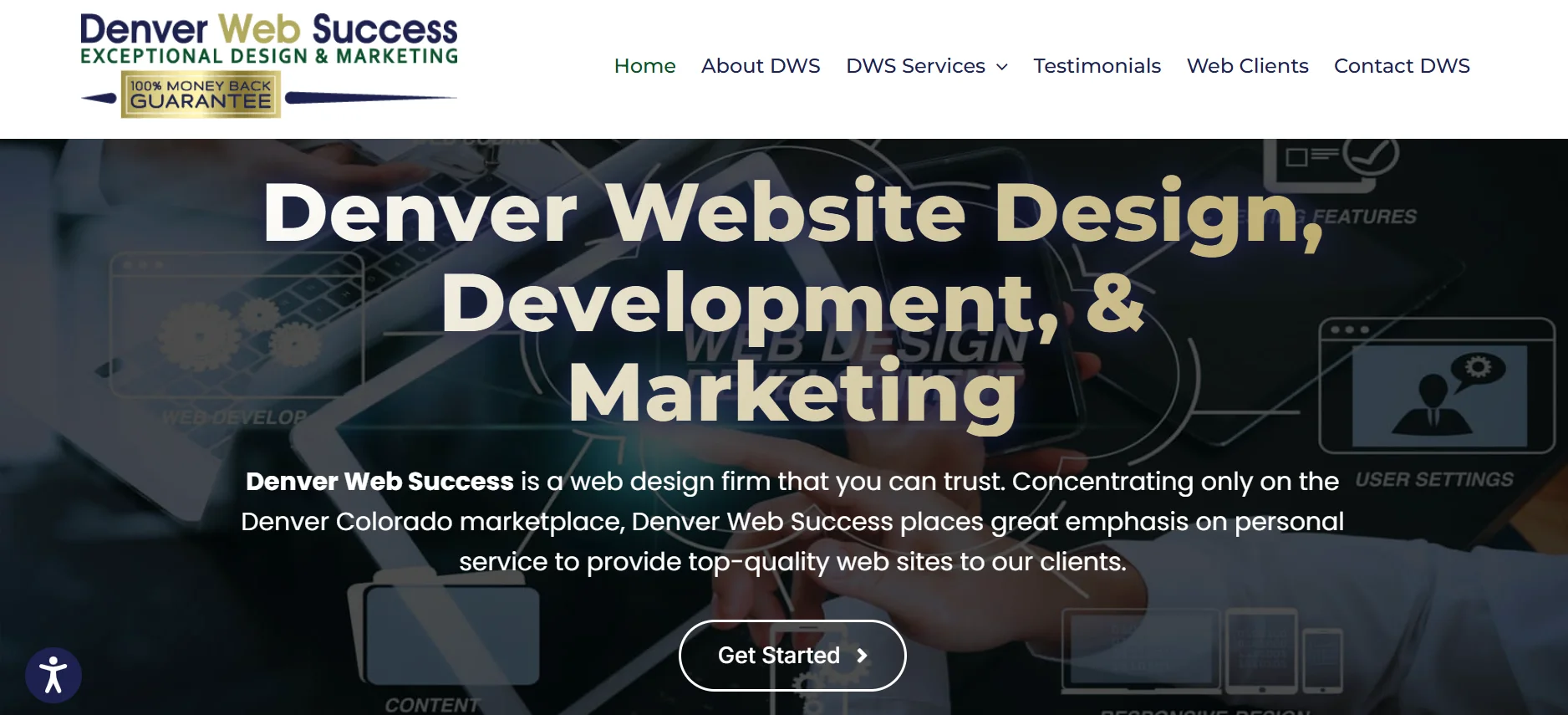
They focus on the long-term relationship, offering quality design and development with attention to branding. They are a good option for businesses that need a "fractional web department" approach.
9. Fireant Studio — Custom CMS Focus
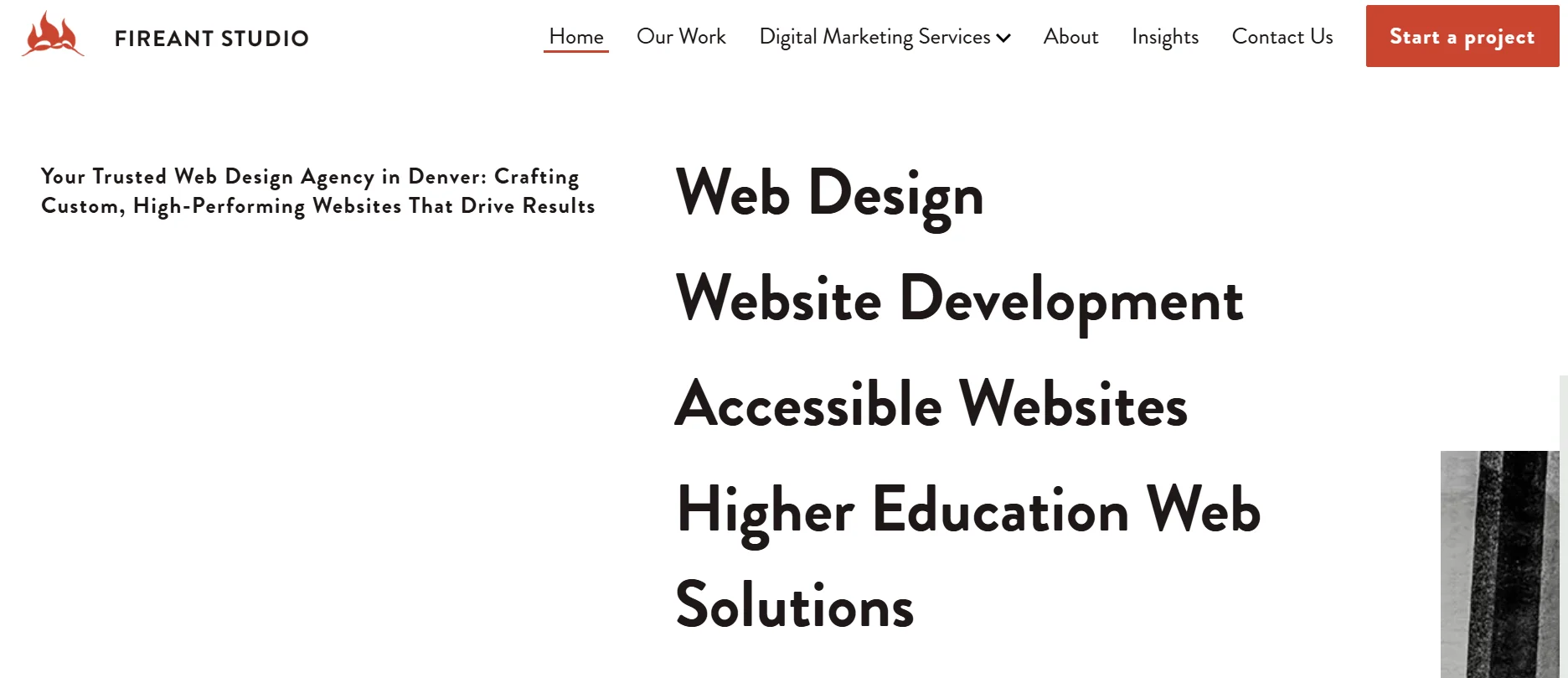
Fireant is known for technical expertise with Drupal and WordPress. If you have a complex legacy migration or need a heavy-duty CMS implementation, their technical chops are respected in the city.
10. Six Leaf Design — Independent Focus
For smaller businesses or early-stage startups with tighter budgets, Six Leaf offers a cohesive visual identity and site design without the overhead of a large agency.
Deep Dives on Key Services
To make an informed decision, you need to understand the mechanics of these services.
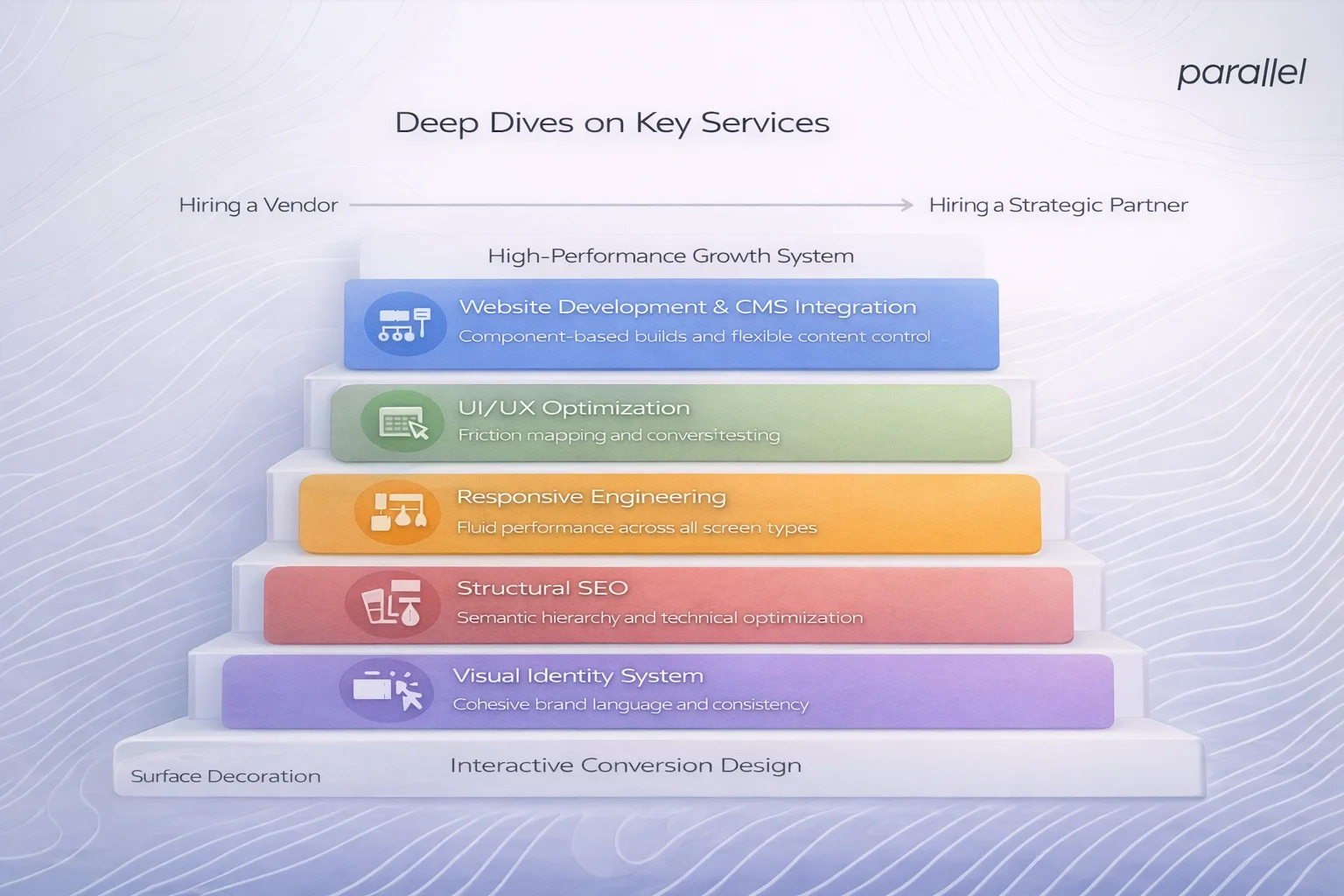
1) Website Development & CMS Integration
Good development is invisible. It loads instantly and never breaks. In 2026, the standard for "good" has risen. It involves component-based architectures.
We see too many teams trapped in rigid templates. A proper CMS integration allows you to build landing pages on the fly using pre-designed blocks. It empowers your growth team. If you have to submit a ticket to IT to change a headline, your development architecture has failed you.
2) UI/UX & User Experience Design
User experience is the ceiling of your growth. You cannot market your way out of a bad product experience.
Effective UX strategy involves friction mapping. We look at where users drop off. Is the form too long? Is the pricing opaque? We solve these issues through reduction. Good design is often about what you take away, not what you add. Well-designed interfaces can boost conversion rates by up to 200%, making it one of the highest-leverage investments you can make.
3) Responsive & Mobile-Friendly Design
True responsiveness is fluid. It adapts to the weird sizes—the foldable phones, the ultra-wide monitors, and the tablets.
Agencies often design for the "happy path" (iPhone 15 and a MacBook Pro). But your users might be on a 3-year-old Android device with a poor connection. Delivering a high-performance experience to that user is where the engineering challenge lies. 47% of users expect a website to load in less than 2 seconds, regardless of device.
4) SEO Strategies That Matter
There is a misconception that SEO is just keywords. In modern web design in Denver, SEO is structural.
It is about "Information Architecture." How do we organize content so that Google understands the semantic relationship between your "Product" page and your "Case Studies"? It involves technical implementations like hreflang tags for international sites and proper canonicalization to prevent duplicate content issues.
5) Visual Identity & Branding Services
Visual identity is your shorthand. It allows users to recognize you without reading a word.
We often see startups with "Frankenstein" brands—a logo from Fiverr, a color palette from a template, and photos from Unsplash. This signals immaturity. A cohesive visual system suggests stability. It tells the investor and the customer that you have your house in order.
6) Interactive Features & Conversion
Interaction drives memory. A static chart is boring. A chart that animates as you scroll tells a story.
However, interactivity must serve a purpose. We use "micro-interactions"—small animations upon clicking or hovering—to provide system status updates. It tells the user, "I heard you." This reduces rage-clicking and frustration. Conversion happens when the user feels in control.
Cost & Timeline Expectations in Denver
Let's talk about money and time. Transparency here saves everyone headaches later.
Typical Price Ranges
- Brochure / Marketing Site: $15,000 – $30,000. This is for established small businesses.
- Custom Product / SaaS Site: $40,000 – $80,000+. This involves deep strategy, custom integrations, and high-end motion design.
- Enterprise Platform: $100,000+. This includes migration, security audits, and massive scale.
If you find a partner offering a custom build for $5,000 in Denver, be wary. You are likely paying for a student to customize a $50 theme. That is fine for a coffee shop, but dangerous for a tech company.
Timelines
- Fast: 6–8 weeks. This requires quick decision-making and existing brand assets.
- Standard: 12–16 weeks. This allows for proper discovery, multiple design rounds, and QA.
- Complex: 6+ months. For massive migrations or product overhauls.
Budgeting for Startups
Do not spend your entire seed round on a website. But do not starve it either. Allocate enough to build a "Minimum Viable Brand" that makes you look bigger than you are. You can always iterate later.
Conclusion
The bar for web design in Denver is high because the talent pool here is exceptional. We have engineers from Google and designers from major coastal agencies who moved here for the lifestyle.
For founders and product leaders, the goal is to find a partner who pushes back. You do not need order takers. You need people who will challenge your assumptions about your user, your content, and your conversion strategy. Forrester predicts that by 2025, over 50% of large B2B purchases will be self-serve, meaning your digital interface must do the selling for you.
Look for the partner who asks about your revenue goals before they ask about your favorite colors. That is the difference between art and design.
FAQ
Q1: What is the average cost of web design in Denver?
For a professional, custom-designed marketing site suitable for a Series A startup, expect to invest between $30,000 and $60,000. Complex platforms with headless CMS integrations will run higher. The price varies based on the depth of strategy and the seniority of the team.
Q2: How long does a typical design project take?
Most high-quality projects take 10 to 14 weeks. This includes 2-3 weeks of discovery and strategy, 4-6 weeks of design, and 4 weeks of development and testing. Rushing the discovery phase usually leads to delays in development.
Q3: Should I choose a local Denver designer or a remote one?
Remote works, but local has advantages. Web design in Denver benefits from local context. We can meet for whiteboarding sessions. We understand the local talent market if you are recruiting. There is a higher level of accountability when you can meet your partner for coffee.
Q4: What should I look for in a Denver design partner?
Look for a process. Anyone can show a pretty portfolio. Ask them how they got there. Did they talk to users? How do they handle engineering handoffs? Look for a partner who speaks the language of business metrics, not just design trends.
Q5: Do Denver web designers handle SEO & digital marketing too?
Some do, but specialists are usually better. Parallel focuses on the build and the on-page technical SEO. We build the race car; marketing agencies drive it. Full-service agencies offer both, but you often trade deep expertise for the convenience of a single vendor.

check out these related blogs




.avif)