Hire the best charleston web design professionals. Identify the best partners for your growth. Learn more in this post.
Charleston is no longer just a historic port city—it’s now a growing technology hub where founders build software and e‑commerce platforms. As the local ecosystem expands, the demand for Charleston web design has surged. Early‑stage teams need web experiences that combine brand storytelling, research and search visibility. At Parallel we build web‑based products for startups around the world. In this guide I share how to choose a web partner, what to look for outside of visuals and who we believe are the leading providers in Charleston. You’ll find evaluation criteria, commentary on user experience and our take on five agencies.
Choosing a web partner isn’t simply about aesthetics. I’ve seen teams get wowed by Dribbble shots but struggle with conversions because the underlying product and marketing strategy were weak. Below is a framework we use internally when vetting an agency.

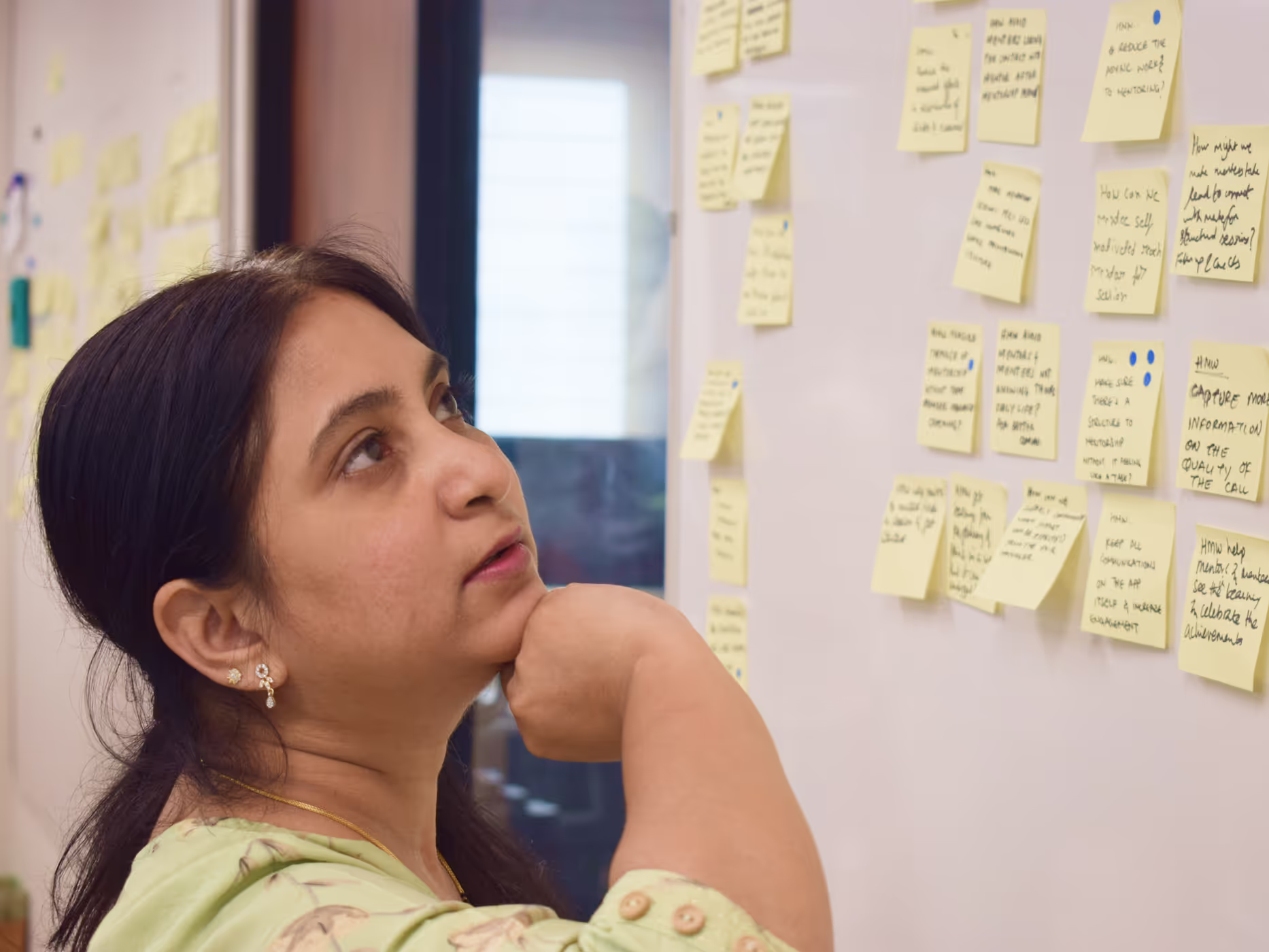
Great web experiences start with understanding the audience. Data from the Nielsen Norman Group shows that user interface polish isn’t enough; design systems and standard components make pretty interfaces easy, so differentiation comes from research, judgment and strategic thinking. At Parallel, we run discovery sprints and synthetic interviews to learn why people seek a product, then map flows before moving pixels. Look for agencies that talk about usability testing, clear navigation and information architecture. The Forbes study on website stats found that half of internet users consider design when forming an opinion about a business. Design decisions aren’t just about aesthetics; they affect retention and trust.
Recent statistics illustrate how quickly visitors decide whether they will stay on your site. Research compiled by VWO reports that users make a judgment about a webpage in just 0.05 seconds and that 94% of first impressions relate to design rather than content. In plain terms, a cluttered header or confusing hero section will hurt your credibility before anyone reads your message. For teams commissioning a Charleston web design partner, this means investing in thoughtful layout and hierarchy pays off immediately. It’s not just about looking nice; it’s about establishing trust almost instantaneously.
Mobile traffic dominates the web. According to Forbes, 62.73% of global web traffic in the first quarter of 2025 came from mobile phones. Mobile users also spend less than half the time on the web compared to desktop visitors. That means your site must load quickly, respond to different screen sizes and allow people to complete tasks without pinch‑zooming. One study cited in Forbes reported that a one‑second improvement in page load speed can increase conversion rates by 27%. When evaluating providers, ask about performance budgets, accessibility standards and how they test across devices. Core Web Vitals, accessible colour contrast and progressive enhancement aren’t optional for 2026.
Poor mobile experiences carry a steep cost. VWO’s research shows that 88% of users are less likely to return to a site after a bad experience and that 72% of people will share good experiences with at least five others. Additionally, Forrester’s analysis suggests that every $1 invested in user experience yields about $100 in return and that a frictionless experience can boost conversion rates by up to 400%. These numbers illustrate why charleston web design projects must prioritise mobile performance, clarity and accessible flows. Cutting corners on responsive design may save a week of development, but it will cost you conversions and word‑of‑mouth growth.
A compelling mockup is useless if the code is fragile. Early‑stage teams need codebases that are maintainable and ready for growth. Ask potential partners which frameworks they use, how they structure components and whether they consider API integration from the start. Look for clear standards on naming, version control and code reviews. Clean front‑end practices reduce technical debt and make it easier for your own engineers to add features later. Integration readiness also matters: if you’re building a SaaS product, your site should connect with analytics, marketing automation and third‑party services without hacks.
Your website is often the first contact someone has with your brand. Strong agencies think about narrative, personality and differentiation. They build design systems that scale across marketing channels, not just one‑off pages. On ParallelHQ’s site we talk about “brand systems, web and launch visuals—fast, modern and with taste”, reflecting our belief that brand and product must be coherent. When reviewing providers, check if their portfolios show consistent typography, colour and visual language. Brand work should amplify what makes you different from competitors.
Visibility on search engines doesn’t happen by accident. Research by SE Ranking notes that about 14% of all keyword searches are made to find local information or businesses, and 42% of users click results in Google’s map pack. A provider who builds search‑friendly architecture helps you reach customers early. Ask about structured data, sitemap generation, semantic HTML and on‑page optimisation. Local signals (such as Google Business listings and city‑specific content) can improve ranking. Technical SEO should be part of planning, not an afterthought.
A content management system (CMS) lets you update your site without engineers. WordPress powers over 43% of the web, but it isn’t the only option. Webflow offers visual editing with hosting, Shopify is built for commerce and headless solutions provide flexibility at the cost of complexity. Think about who will edit content, how often and which integrations you need. For e‑commerce, look for secure payment gateways, inventory integration and support for promotions. A good agency should advise on architecture rather than pushing one tool.
Websites aren’t static. Plugins need updates, frameworks change and security patches arrive regularly. Without maintenance you risk downtime or hacks. Forbes points out that 70% of small business sites lack a call to action; this suggests many owners build once and never iterate. A support plan might include security monitoring, backups, performance reviews and minor content adjustments. Clarify support agreements and how quickly the agency responds to issues.

Overview
ParallelHQ is a product‑driven studio that helps startups and growth‑stage teams ship high‑quality, scale‑ready web products. Our philosophy is built on research, clarity and craftsmanship. We design for contexts where artificial intelligence is a core layer, but we care even more about making everyday tasks easier. Our site emphasises brand systems, web design and launch visuals done “fast, modern and with taste”.
Core strengths
Services snapshot
Ideal for

Overview
Holy Webs positions itself as a local Charleston web design company focused on custom, high‑converting sites. Their page states that they create “custom, high‑converting websites that become your most powerful marketing tool”. They emphasise working with growing businesses in Charleston and shape each project around goals and demographic. They combine creative and technical skills to build responsive designs.
Strengths
Ideal for

Overview
Charleston Website Studio markets itself as a boutique agency blending design, strategy and local insight. They position their service as “custom Charleston web design built to perform” with no templates or one‑size‑fits‑all solutions. The site highlights that they merge local market understanding with global best practices.
Strengths
Ideal for

Overview
Advent Designs has been part of the Charleston creative scene for years. They describe their mission as helping clients tell their story through web design and marketing. Their services include web design and development, internet marketing, search engine optimisation, branding, logo design and video production.
Strengths
Ideal for

Overview
Lounge Lizard is a well‑known national agency with a location in Charleston. They provide a wide array of services including branding, web design, SEO, marketing automation and custom web development. Their Charleston page highlights that they combine UX/UI design, advanced technology and marketing strategies to create sites that “drive results”.
Strengths
Ideal for

Ask whether the agency begins with research and discovery. Do they map user journeys and gather insights before designing? The Nielsen Norman Group warns that shallow surface design will not differentiate your company as standardised components and artificial‑intelligence‑powered tools make interfaces easy. An agency that jumps straight into mockups without understanding your audience might deliver something pretty but ineffective.
Interrogate the technical stack. Which frameworks and languages will they use? How do they handle performance budgets, accessibility and cross‑browser testing? Do they set up analytics and error monitoring? Early technical decisions have long‑term effects; the wrong framework can hinder new features. Look for teams that use modern development practices and document their code.
Product‑led companies care about metrics such as activation, retention and lifetime value. An agency should understand SaaS funnels, onboarding patterns and A/B testing. Ask about their experience iterating on minimum viable products and running user research. Check if their designers are comfortable discussing conversion rates and not just visuals.
Ask how they incorporate search strategies early. Are they planning site structure around keywords and search intent? Do they set up structured data and schema? According to SE Ranking, businesses with complete Google Business Profiles are 70% more likely to attract visitors. Local signals and reviews matter; find a partner who builds these into the plan. Also ask about analytics dashboards and event tracking; growth is easier when you measure.
Websites need ongoing care. Check whether the agency offers security updates, backups, performance monitoring and content support. Ask about response times for issues and whether they have tiered support options. Maintenance reduces risk and ensures your site remains up to date.
Charleston offers a range of agencies—from boutique studios to national firms—but the right Charleston web design partner must be chosen with care. For startups and product‑led businesses, the differentiators aren’t fancy animations or trending visuals; they are user research, technical depth and growth readiness. A strong partner will ask hard questions, dig into your audience and craft a scalable foundation. Whether you choose a local specialist like Holy Webs, a boutique studio like Charleston Web, a full‑service firm like Advent Designs, a national powerhouse like Lounge Lizard or work with us at ParallelHQ, focus on strategic fit. Think about your stage, goals and budget. A thoughtful investment in web design can shorten time to market and improve product‑market fit.
Costs vary based on scope, functionality and agency expertise. Basic marketing sites might start around a few thousand dollars. Custom applications with user flows, integrations and e‑commerce can range from tens of thousands to well over six figures. Be sure to budget for discovery, content creation and maintenance, not just the build.
WordPress powers roughly 43% of websites and remains a solid choice for many small businesses due to its flexibility and plug‑in ecosystem. Webflow offers a visual editor suited to marketing teams. Shopify excels at e‑commerce. Headless content systems provide flexibility but require more engineering. The right choice depends on your team’s skills, integration needs and budget.
Forbes reports that an average website with basic features takes about three months to design. Projects with complex integrations or custom modules can take longer. Discovery, design, development, testing and content creation all contribute to the timeline. Rushing often leads to poor results.
Some agencies bake technical SEO into their builds. Charleston Web, for example, integrates keyword research and structured data into development. Others may offer search services as separate packages. When evaluating partners, ask what’s included and whether you’ll need a separate SEO consultant.
Prioritise user research, scale‑ready code and conversion focus. Ensure the team understands SaaS metrics and can iterate quickly. Look for partners who question your assumptions rather than simply taking orders. A good agency is a thought partner, not a vendor.
Yes. Security patches, CMS updates and performance optimisation are ongoing needs. Without upkeep your site may become slow, insecure or incompatible with new browsers. A maintenance plan ensures your web presence continues to work for your business.