Founders often mistake visual decoration for actual strategy. They spend weeks arguing over hex codes while their core messaging remains confusing. I see this happen constantly. Visuals matter, but strong positioning is fundamentally about clarity. It shows users exactly what you do. Choosing the best branding tools for startups is not about finding the fanciest software. It is about building a system that lets your team move fast while keeping your message consistent. Let us look at what actually works based on years of helping early-stage teams ship better products. No hype. Just practical decisions that scale.
Best Branding Tools for Startups: TL;DR
The best branding tools for startups combine clear strategy with fast execution. You need a partner like ParallelHQ for direction, paired with branding tools like:
- Creation tools → Canva, Figma, Webflow
- Strategy & planning → Notion, Miro
- Brand consistency → Frontify
- Communication → Loom
- Feedback & improvement → Sprig
- Polish & experience → LottieFiles
- Execution accuracy → Zeplin
Why visual consistency dictates product success
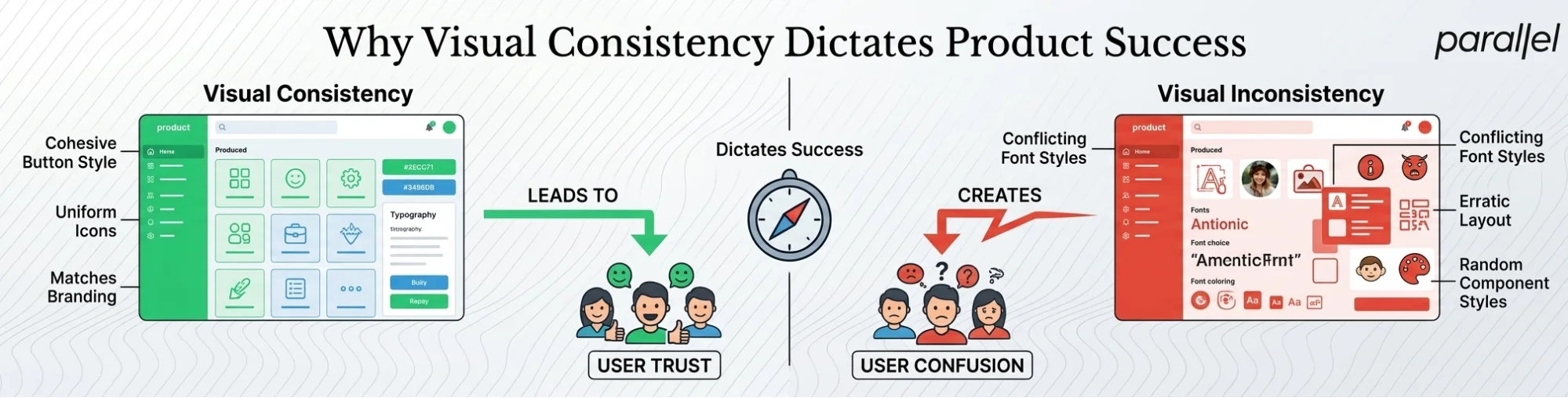
A promise is made every time a user visits your site. When the product fails to keep that promise, trust breaks. Early-stage companies often separate their marketing site from their actual software. The marketing site looks beautiful. The software looks like a raw spreadsheet. This disconnect confuses users right when they are trying to learn your system.
I have watched teams lose users during onboarding simply because the application felt like a completely different company. According to a 2025 analysis by Nielsen Norman Group on usability, visual consistency directly impacts perceived usability. Users tolerate minor friction when the interface looks polished and familiar. They abandon products that look disjointed.
You must handle your visual assets as operational infrastructure. It is not just about looking good. It is about reducing cognitive load for your users. Consistency breeds familiarity. Familiarity builds trust. This is often the first step in a new product development process.
The difference between visual design and product perception
Many teams assume their job is done once the logo is finalized. This is a massive mistake. Your users do not interact with your logo in a vacuum. They interact with your buttons, your load states, and your error messages. Every single interaction shapes how they perceive your company.
If your marketing promises speed, but your application requires ten clicks to finish a basic task, your positioning has failed. Good software bridges the gap between what you say and what you actually do.
We spend a lot of time fixing this exact issue. We look at why UX design strategy is important because it forces teams to connect their external claims to their internal workflows. Your software must prove your claims. If it fails to do so, no amount of clever copywriting will save your retention rates.
Where teams go wrong with early identity building
Premature optimization kills momentum. Founders try to build massive guidelines before finding product-market fit. They end up with a massive PDF document that nobody reads.
Startups lack the need for rigid rules in their first year. They need flexible systems. When you lock down every pixel too early, you restrict your team from testing new ideas. You should read about what lean UX actually looks like in practice. It requires adaptability over strict perfection.
Another trap is relying entirely on templates. Templates help you move fast. Using them unmodified makes you look like every other company in your sector. You have to find the middle ground between speed and unique positioning. Do not try to look like a massive enterprise corporation on day one. Authenticity wins over corporate stiffness. Build something true to your current stage.
Evaluating tools for your team
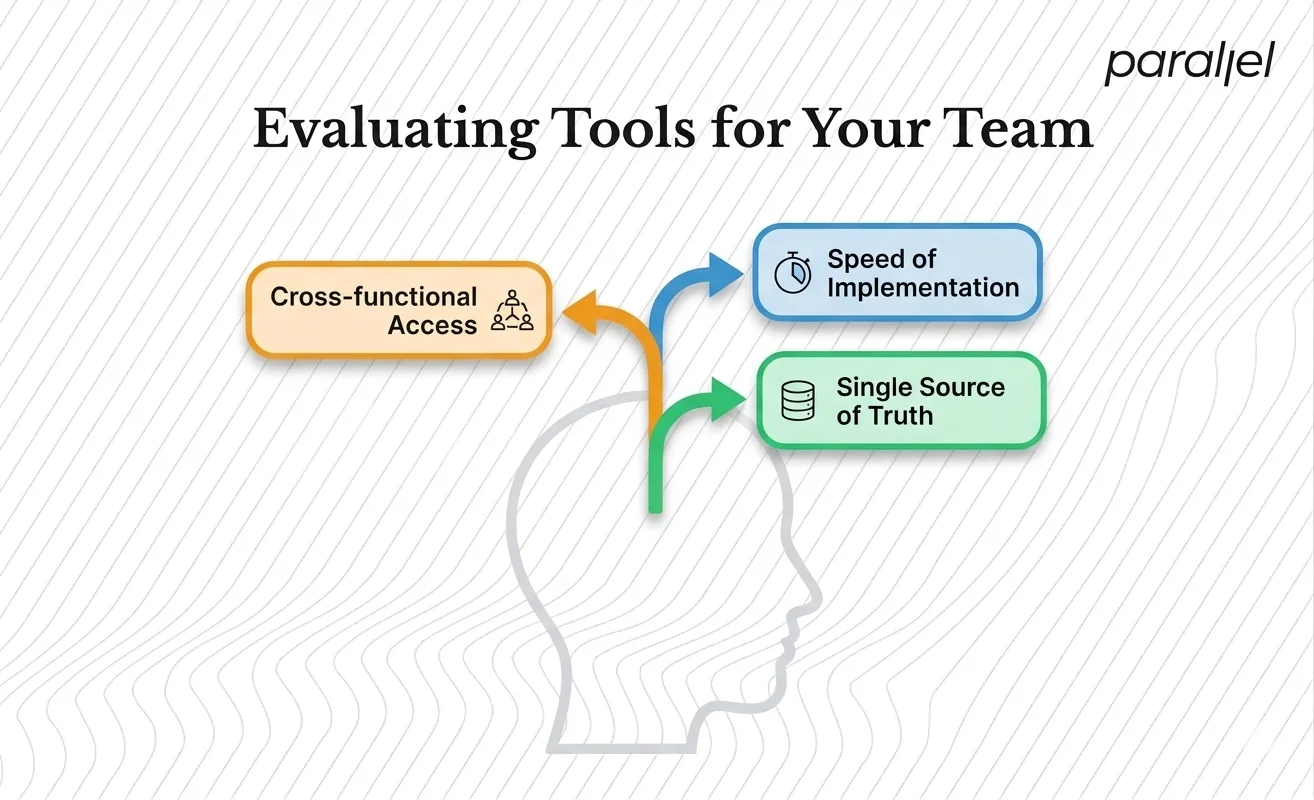
Evaluating the best branding tools for startups means looking closely at adoption friction. When we audit a team stack, we look for three specific traits:
- Speed of implementation: If a tool takes three months to deploy, it is wrong for your stage.
- Cross-functional access: Sales, marketing, and engineering must be able to use the assets without design team oversight.
- Single source of truth: Updates made in one place must cascade automatically.
Modularity is critical. You want systems that allow you to update a color code in one central location and see that change reflect everywhere. This approach prevents the fragmentation that happens when multiple designers and developers work in silos.
Always optimize for speed of iteration. Your stack must support rapid prototyping and quick feedback loops. The tools must serve the team, not vice versa.
Top 10 branding tools for startups that matter right now
1) Canva
There is a stigma around Canva in professional design circles. You need to drop that stigma. Canva is a massive asset for early-stage teams.
Your marketing and sales teams need to produce collateral quickly. They lack the time to wait three days for a designer to make a social media graphic. Canva allows you to set up strict templates that non-designers edit safely.
It protects your core identity while enabling the rest of the company to move fast. It is a necessary compromise for startups trying to scale their output without hiring a massive design department. For heavier lifting, you might seek affordable branding agency help, but Canva handles the daily grind.
2) Figma
Figma is the absolute standard for collaborative interface building. It houses your design system and connects your broad vision to actual product screens.
What makes Figma powerful is the component library. You set up your core typography and color variables once. When you update a variable, it cascades through every file. This eliminates the massive inconsistencies that plague fast-moving teams.
We use Figma for almost everything, from initial wireframes to high-fidelity handoffs. It bridges the gap between your marketing site designers and your core product team. Review what wireframe fidelity makes sense for different stages to see how we use it.
3) Frontify
Static PDF guidelines are dead. The moment you export a PDF, it becomes outdated. Frontify replaces the static document with a living, web-based hub.
Your team needs a single source of truth for assets. Frontify allows anyone in your company to grab the correct logo, font, or messaging snippet without bothering the design team. It saves countless hours of back-and-forth communication.
We often see startups struggle with version control for their assets. Frontify solves this by making the guidelines interactive. It ensures your sales team and your product team use the exact same visual language.
4) Webflow
Webflow consistently ranks among the best branding tools for startups because it removes the engineering bottleneck from marketing. Your marketing site is often the first interaction a customer has with your business.
Early-stage teams are unable to pull backend engineers off the core product to update marketing pages. Webflow allows designers to build and deploy complex, highly customized marketing sites independently.
It forces you to think systematically about your CSS classes. This is great practice for organizing your actual product code. We frequently rely on responsive design services built on platforms like this to ensure the message looks perfect on every device.
5) Notion
Visual assets need a strategic foundation. Strategy lives in Notion. This is where you document your voice, tone, and competitive positioning.
We use Notion to build out what user scenario planning and messaging matrices. It is entirely customizable. You get to link your broad mission statement directly to specific project briefs.
When new employees join, you want them to understand the thinking behind the visuals. Notion provides the context that Figma and Webflow lack. It functions as the brain of your entire operation.
6) Loom
Video communication has become a massive part of establishing trust. Loom allows founders to record quick, personal updates for users. How you speak is a huge part of your identity.
Written release logs are fine. A two-minute video from the founder explaining why a new feature matters builds actual loyalty. It adds a human element to your software that plain text lacks.
Loom also helps internally. When documenting what design system changes just happened, a quick video explanation is infinitely better than a massive text update. It keeps the team moving fast.
7) Sprig
Sprig is one of the best branding tools for startups wanting to measure customer perception directly inside their software. You have to ask your users how they feel about your product.
Standard survey tools feel clinical and boring. Sprig integrates directly into your product experience. It matches the modern, polished aesthetic most startups want to project. It proves that even gathering feedback can be an extension of your identity.
We use this to run usability testing questions and gather qualitative data. You are unable to build a strong identity in a vacuum. You need constant feedback from people actually using your software.
8) LottieFiles
Motion is a huge part of modern product identity. A static interface feels outdated. LottieFiles allows you to implement complex, high-quality animations without slowing down your application.
Micro-interactions bring your product to life. A well-designed loading state or success animation communicates polish and care. It tells the user to sweat the details.
Lottie animations are tiny JSON files. Your engineers will not complain about performance hits. It is the smartest way to add motion to your mobile application design services or web platform.
9) Zeplin
Zeplin completes any list of the best branding tools for startups by making sure the final code matches the initial design. The handoff between design and engineering is where most visual identities fall apart.
Designers create perfect screens. Engineers build approximations. Zeplin translates design files into precise code snippets and specifications. It removes the guesswork.
It forces both sides to speak the same language. When engineers have exact measurements and variable names, the final product actually looks like the intended vision. Review how this maintains quality during what release plan cycles.
10) Miro
Visual strategy needs an open space before it needs strict rules. You have to map out your positioning, user flows, and core messaging before touching a design file. Miro gives cross-functional teams a shared space to discuss direction.
We use it to build initial concepts and bring stakeholders together. It stops founders from jumping straight into high-fidelity mockups. You should review how this early stage impacts your product planning phase.
A practical approach to implementation
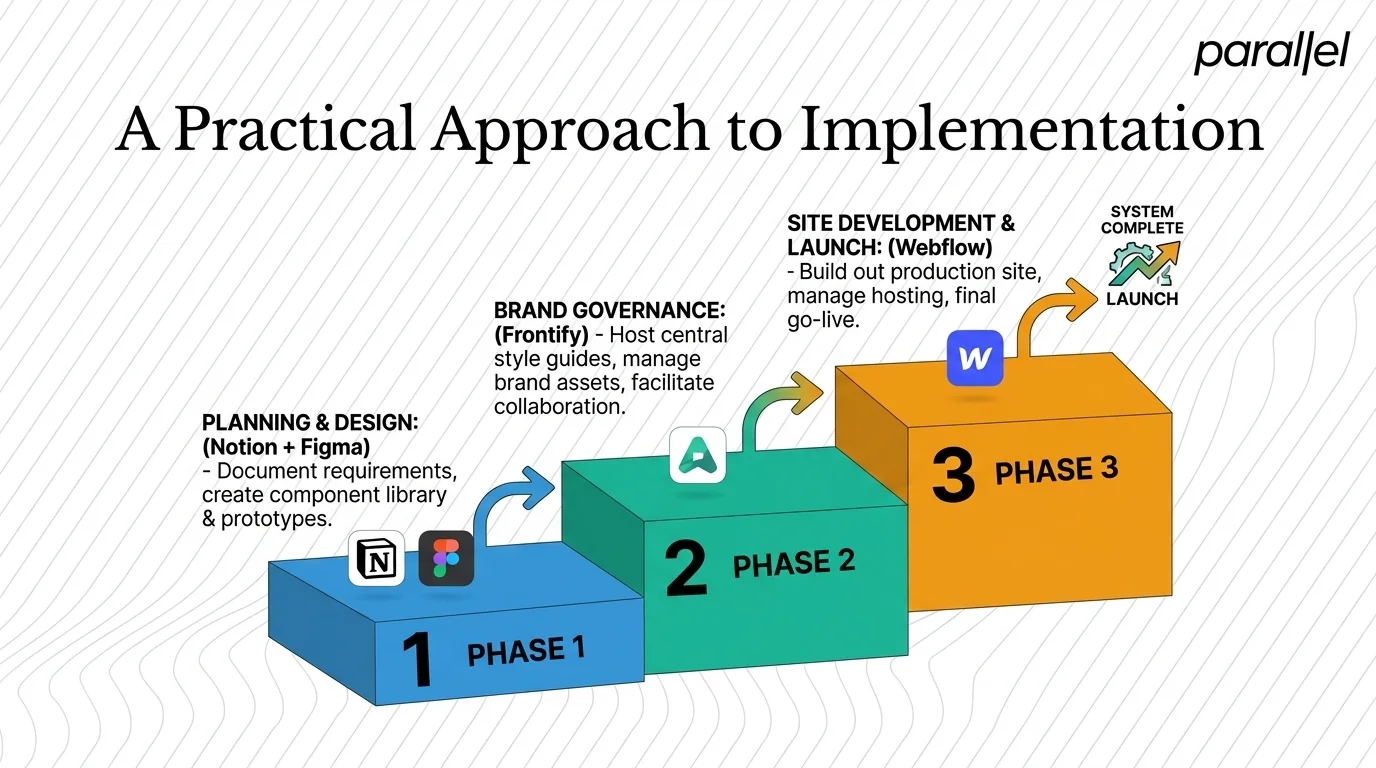
Implementing the best branding tools for startups requires a phased approach. Try not to adopt all these platforms on a Monday morning. It will paralyze your team.
We suggest rolling out your systems in distinct phases:
- Phase one: Document your positioning strategy in Notion and build core visual assets in Figma.
- Phase two: Set up Frontify to distribute those approved assets to the broader team.
- Phase three: Move marketing execution to Webflow to free up engineering resources.
According to a 2026 update from Gartner on technology adoption, staggered software rollouts cause 40% higher long-term utilization rates among internal teams. You have to train your people on the reasoning before you train them on the software mechanics.
Hold weekly reviews. Ask your team where they feel friction. If an asset is hard to find, fix the folder structure. If engineers are guessing at spacing, improve your Zeplin workflow. Constant iteration is better than a perfect initial setup. Check our guide on how often stakeholders team members should review project roadmap to establish a good cadence.
Scaling your systems as you grow
What works for a team of five will break for a team of fifty. Your systems must scale. As you add more designers and developers, you need stricter governance.
Early on, everyone has edit access to Figma. Later, you restrict edit access to a core systems team. This prevents accidental changes from cascading across your entire product. You move from a state of rapid experimentation to a state of guarded consistency.
The same applies to your messaging. Your Notion documents will grow from a single page into a massive wiki. You need to assign ownership. Someone must be responsible for ensuring the tone stays consistent as new marketing hires join the team. Growth breaks systems. Expect it and plan needed structural changes. Read about what design operations means for a growing team to prepare for this shift.
Conclusion
Your identity is the sum of every interaction a user has with your company. The software you use to manage that identity should make those interactions better. Choose platforms that reduce friction, encourage consistency, and get out of your way. Stop overcomplicating the setup. Focus on clear messaging and clean execution. Let the thinking speak for itself. Ship good work.
Frequently asked questions
1) What makes a brand tool effective?
An effective platform reduces time between idea and execution. It should enforce consistency without requiring massive manual oversight. If a system requires constant policing, it is failing your team.
2) How do we choose the right platforms for our stage?
Focus on your immediate bottlenecks. If your engineers are overwhelmed with marketing site updates, adopt Webflow. If your sales team uses outdated logos, adopt Frontify. Solve the most painful problem first. Learn to prioritize product backlog issues to make better decisions.
3) Figma vs. Canva: Which is better for early teams?
You need both, but for different purposes. Figma is for your core product designers and developers. Canva is for your marketing and sales teams who need to generate social collateral quickly without breaking design rules.
4) Is an expensive management system necessary immediately?
When evaluating software, cost is a factor. No, you do not need an enterprise system on day one. A well-organized Figma file and a clear Notion document are enough to get you through your seed stage.
5) How does ParallelHQ help our brand system?
We work directly with your founders and product teams to build an identity that translates perfectly into your software interface. We ensure your positioning is clear and your visual systems are actually buildable by your engineering team. We are a b2b brand positioning agency focused on product truth.
6) What is the role of strategy in tool selection?
Strategy dictates what you need to build. If your strategy relies heavily on content marketing, your web publishing platform is your most critical asset. Your business goals must determine your software purchases.
7) How quickly can a team implement these resources?
You can set up basic systems in a week. However, building the habits to use them correctly takes months. Focus on daily enforcement and clear communication to build the right muscle memory across your entire company.
8) What is the biggest mistake founders make with brand assets?
The biggest mistake is ignoring the best branding tools for startups and trying to invent custom workflows. Founders waste time building custom asset libraries when platforms like Frontify already exist. Buy the software, focus on your actual product.

check out these related blogs















































































.webp)