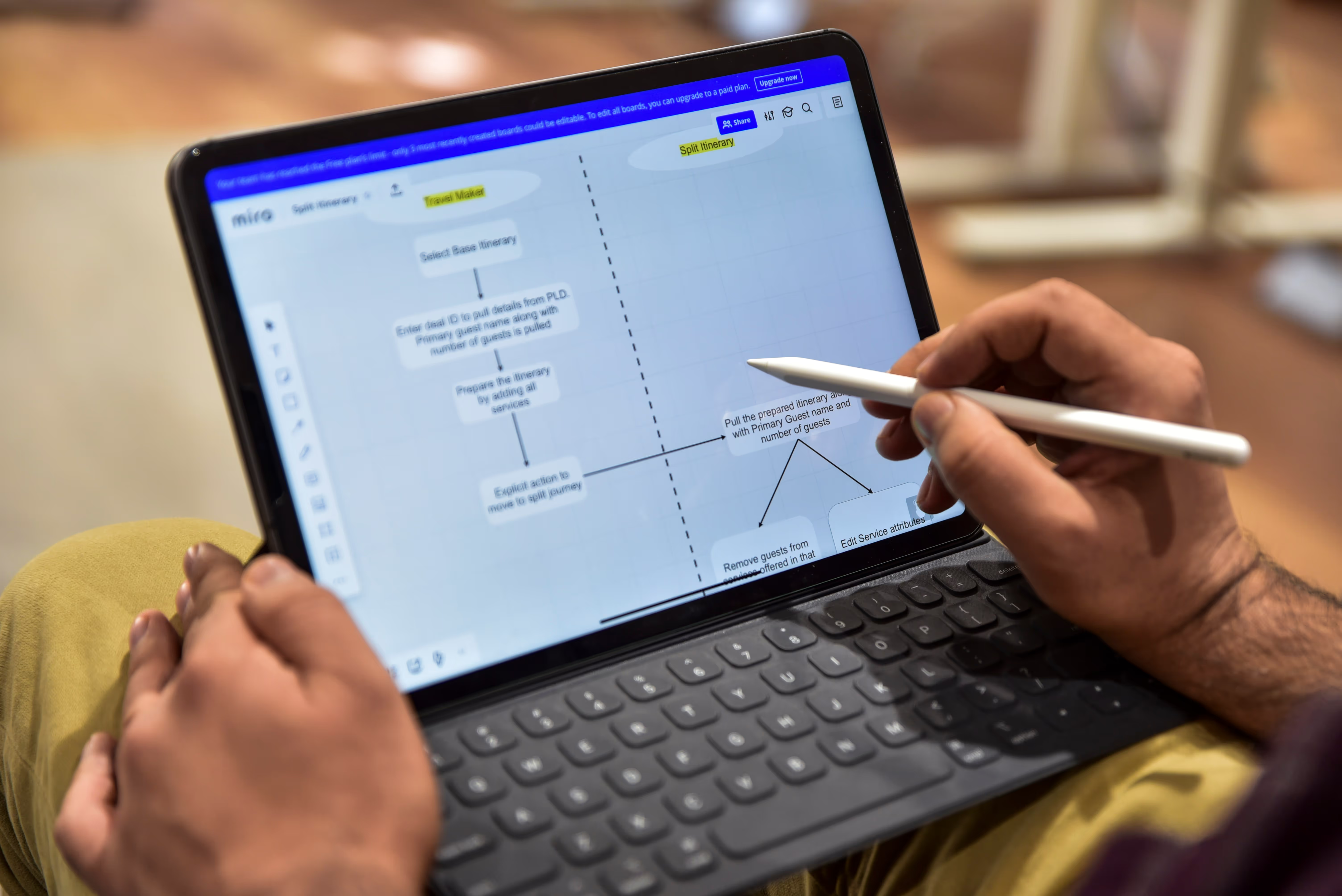
Most early‑stage founders ask me why they should invest in user experience when they can start coding right away. The truth is that a great experience isn’t a nice upgrade on a functional product; it’s a growth engine. Data from industry studies shows that improving the user experience yields a return of $2 to $100 for every dollar spent and that 86 % of buyers are happy to pay more for a smooth experience. On the other hand, poor usability has a huge price. Nearly nine in ten web users won’t return after a bad interaction, forty percent abandon a site if it takes more than three seconds to load, and slow pages destroy conversions.
We’ve even seen a single form field cost an e‑commerce site $300 million per year in lost sales. For lean teams, the waste isn’t just revenue; it’s months of rework and developer time spent building the wrong thing. That’s why many startups look beyond their own teams and hire ux design agencies—specialist partners who bring the research, strategy, and craft needed to build products that users love. This guide explains what such agencies do, how we evaluated them, our 2026 picks, and how to choose the right partner for your stage and budget.
What do UX design agencies actually do?
At their core, these agencies help product teams make informed decisions before and during development.
- They run user research to understand motivations and pain points. They define a UX strategy that aligns the product with business goals and user needs.
- They map information architecture so that content and features are easy to find. They create wireframes and prototypes to test flows before coding.
- They refine interaction design so that every tap and click feels natural. They craft visual design to communicate brand character and aid comprehension.
- They run usability tests to validate assumptions and surface issues. Increasingly they also design mobile apps and provide interface development support, ensuring hand‑offs to engineering are clear and that components work across devices.
These activities cover the entire life cycle: from discovering what to build, to iterating on flows, to validating an MVP, to polishing a mature product. They are not just about making something look nice; they make sure the product works for the people who matter: the customers.
UX vs UI vs product design
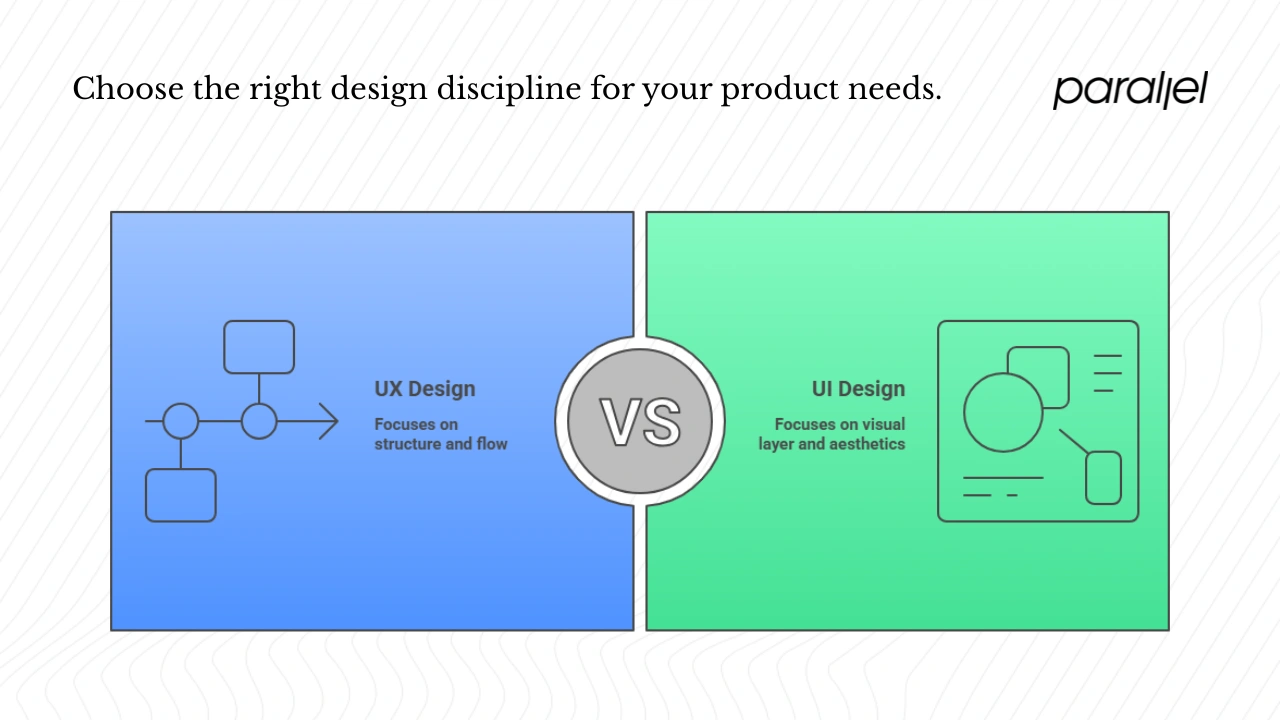
People often confuse user experience with visual design, but they are distinct disciplines. UX design defines the structure and flow of a product—how information is organized, how users move through tasks, and how each step fits into their broader goals. UI design focuses on the visual layer: typography, color, spacing, icons, and micro‑interactions that communicate status and affordances. Product design sits at the intersection of UX, UI, business objectives, and technical feasibility. A product designer balances desirability, viability, and feasibility. A specialist agency can add value by bringing these roles together under one roof, while also working closely with founders and engineers. They help you pick the right battles: sometimes you need lean wireframes and quick prototypes; other times you need a full design system that scales across teams.
Best UX design agencies reviewed (2026 edition)
1) ParallelHQ
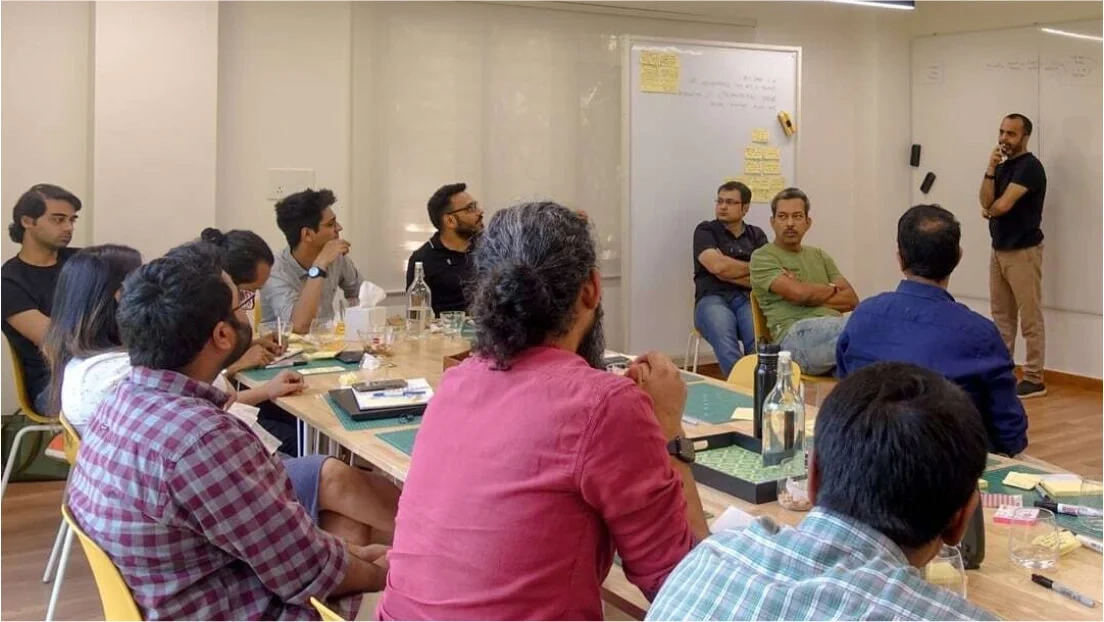
As the founder of Parallel, I’ve spent the past decade building products and advising startups. ParallelHQ positions itself as a strategic partner for product‑driven companies. We go deep into UX strategy and product thinking. Our process starts with user research and customer journey mapping to uncover the real problems. We then craft information architecture and prototypes to test assumptions quickly. We work closely with founders and product managers, embedding with their teams instead of throwing designs over the wall. Our frameworks help early‑stage companies find product‑market fit and later‑stage teams optimise onboarding, activation, and retention. We aren’t the right choice if you just want shiny screens; we’re a fit if you want to understand why users behave the way they do and how design drives growth. The high‑collaboration model means we often act as an extension of your team, pairing with engineers to ensure smooth implementation.
Ideal for: Seed‑stage startups defining their first product; SaaS teams refining onboarding; companies looking for a long‑term partner rather than one‑off visuals.
Strengths: Deep product mindset; structured frameworks; hands‑on collaboration with tech teams.
CTA: Book a call
2) UX Studio
Referenced often in industry lists, UX Studio is known for a research‑led approach. Their discovery workshops bring stakeholders together to align on goals. They run extensive usability tests, surveys, and in‑depth interviews. The outcome is a clear problem statement and prioritised roadmap. Their methodology is more structured than experimental, which suits complex environments. They are at home with scale‑ups and enterprises tackling multi‑role ecosystems. If you need to align multiple teams and require rigorous documentation, they’re a strong option.
3) Neuron
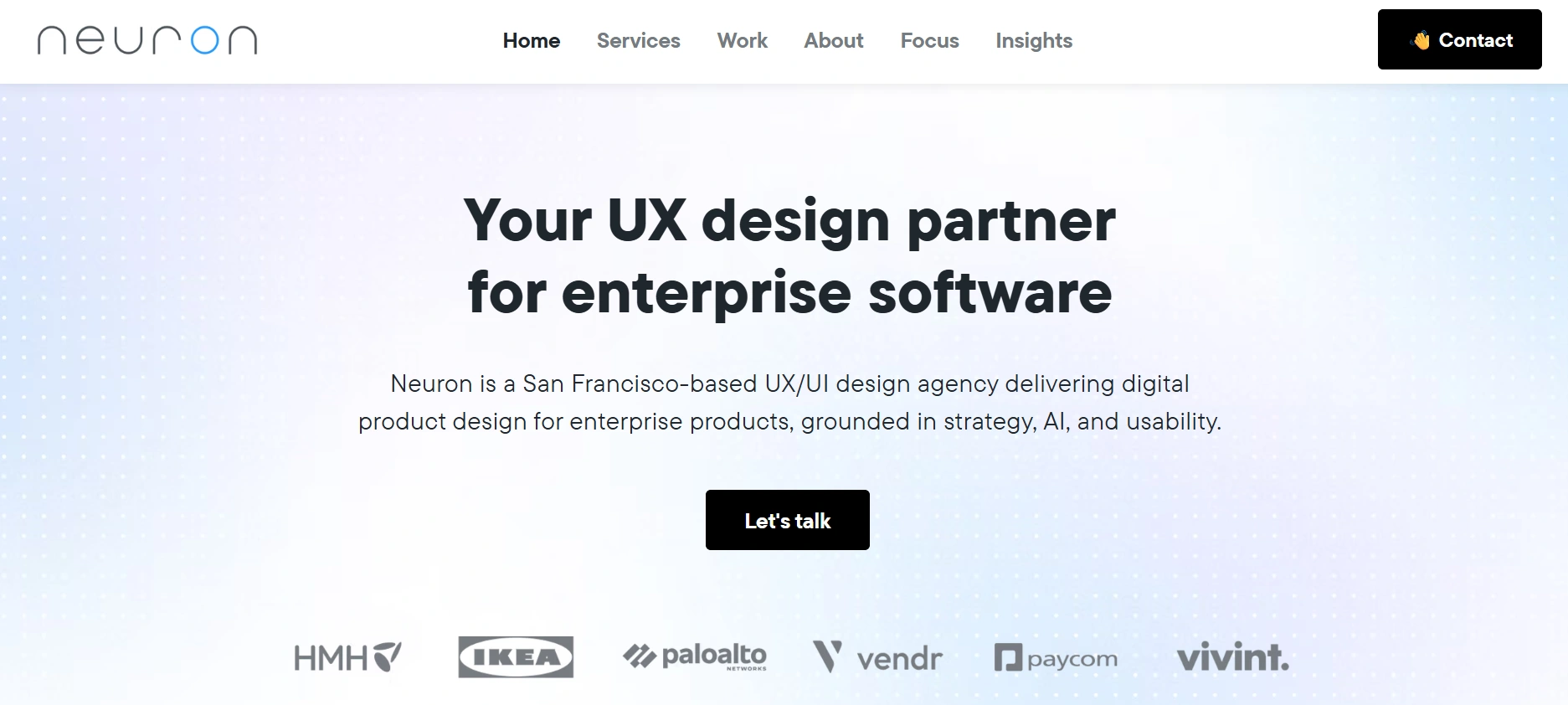
Neuron positions itself at the intersection of product design and high‑end visuals. They craft polished design systems and pay close attention to interaction patterns. Much of their work is in SaaS and B2B platforms preparing for funding rounds. They build detailed component libraries that help internal teams move faster. They are a great choice for tech products that need to impress investors and scale design across multiple modules.
4) Flying Bisons
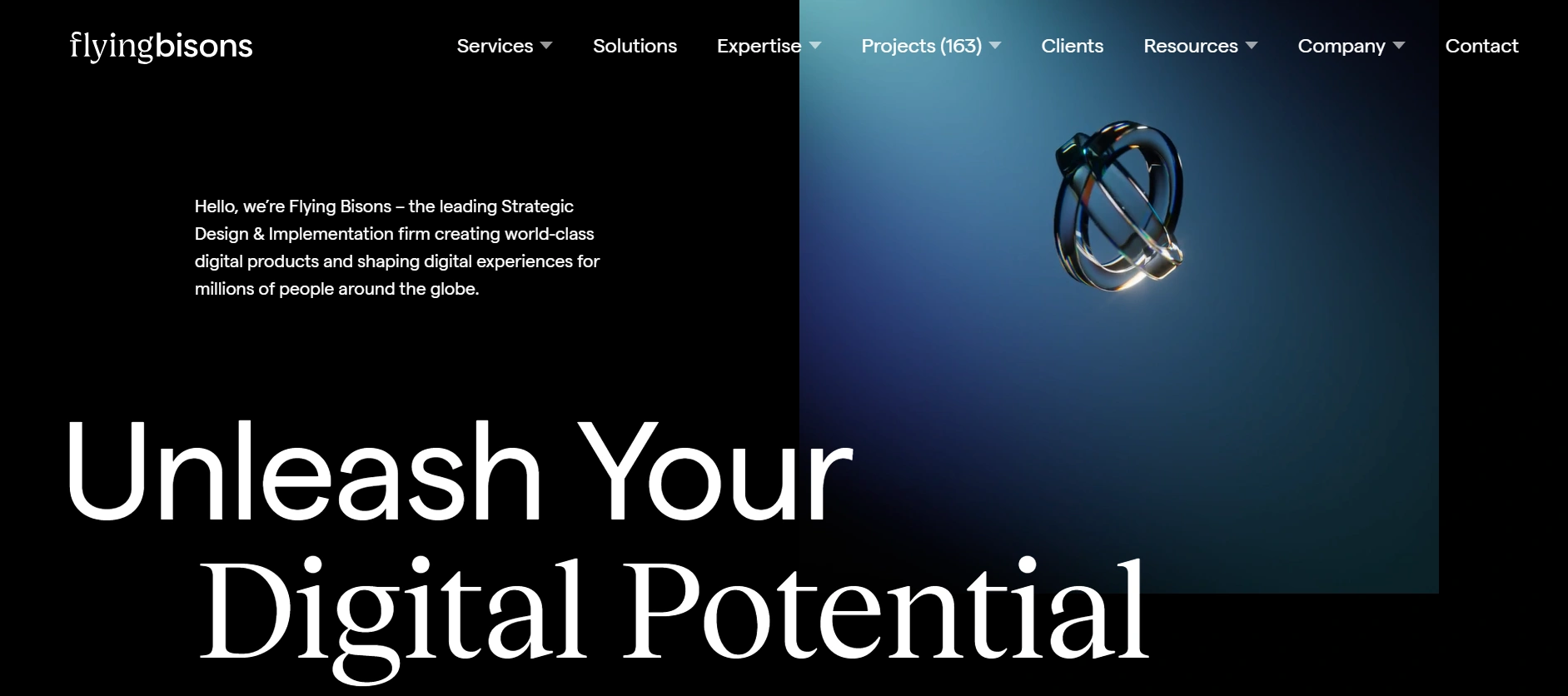
Flying Bisons focuses on conversion‑driven design for e‑commerce and consumer brands. They specialise in customer journey optimisation and data‑informed usability tests. Their team uses analytics and A/B testing to refine funnels and reduce friction. They are a go‑to agency for direct‑to‑consumer brands and growth‑stage products wanting to improve metrics like add‑to‑cart, checkout completion, and lifetime value. Their work often involves reworking information architecture and micro‑interactions based on real user behaviour.
5) OneThing Design
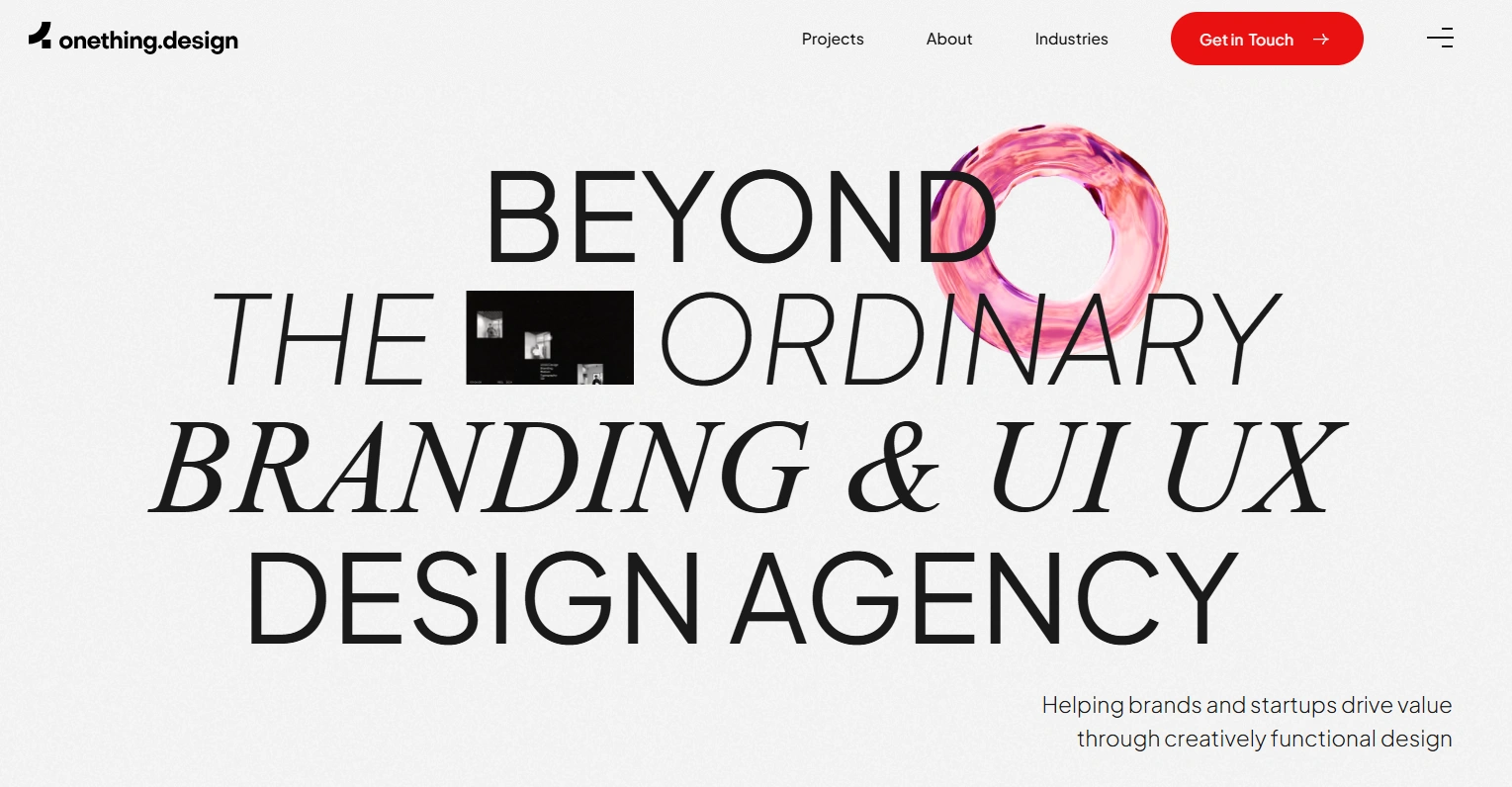
OneThing Design is known for prioritising accessibility and clear information architecture. They invest heavily in research depth, especially for regulated industries where compliance matters. Their projects often involve complex, multi‑layer platforms and enterprise software. If your product must meet accessibility guidelines or serve multiple user roles with different needs, they offer the rigour required. Their team has strong expertise in designing for enterprise and government sectors.
6) Impact TechLab
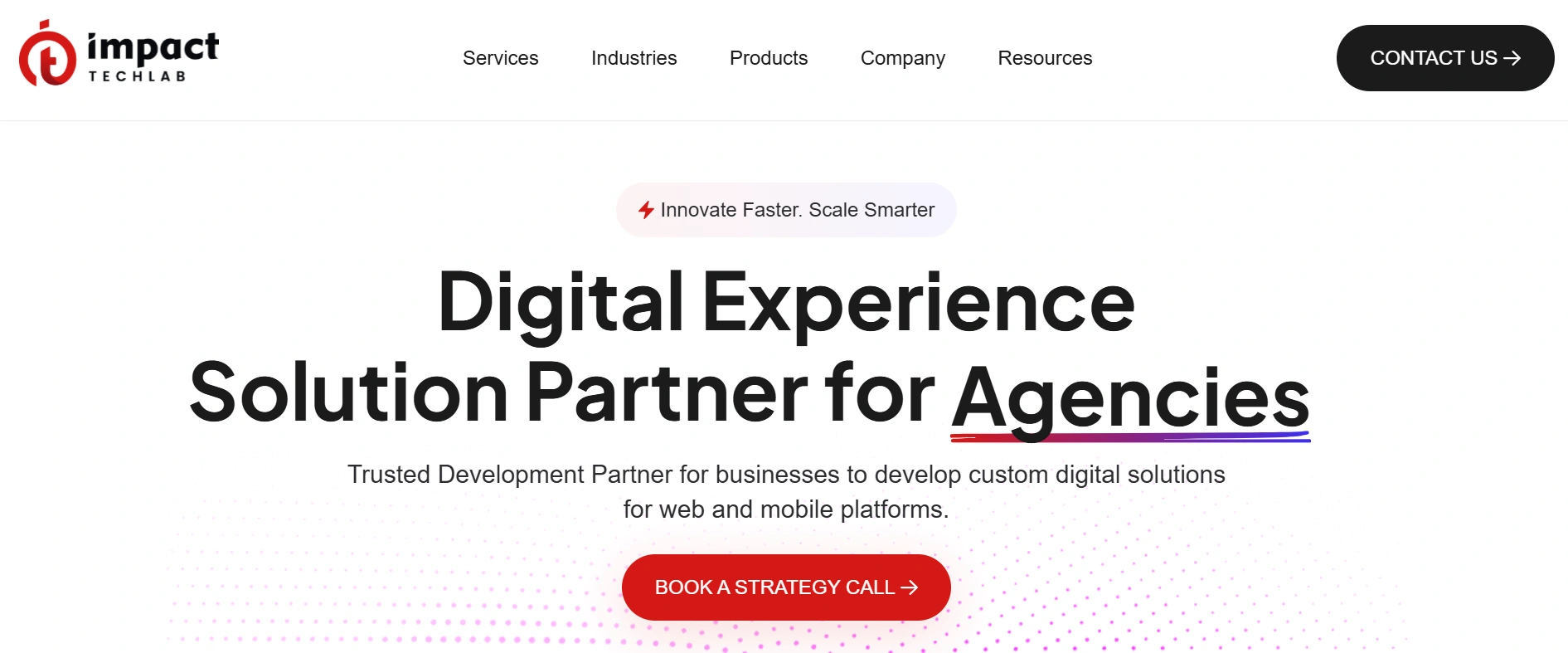
Impact TechLab is a broader consultancy that includes UX services alongside engineering. They are a good fit when you need both design and technical implementation aligned under one partner. Their value lies in the collaboration between designers and developers; they ensure that prototypes translate smoothly to code. This makes them suitable for teams with limited in‑house development resources or those looking for end‑to‑end delivery.
Comparing agencies: quick snapshot
The table below summarises the strengths of each agency. Short phrases make it easy to scan. Columns capture who they are best for and how they score across research depth, strategy, mobile expertise, enterprise readiness, and startup friendliness. Use it as a starting point, then dig deeper based on your needs.
How to choose the right ux design agency for your startup
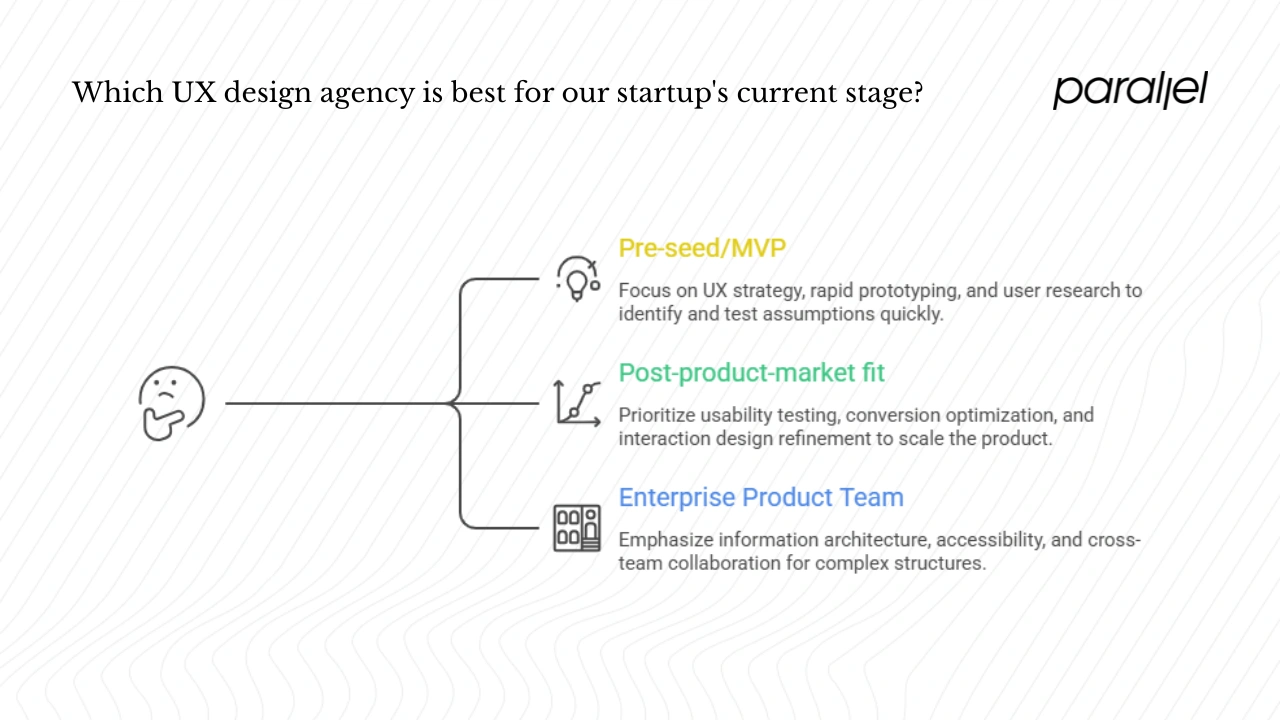
If you’re pre‑seed or building an MVP
At the idea stage you don’t need ornate interfaces; you need clarity. Prioritise UX strategy and rapid prototyping. Invest in user research to understand real problems and in quick sketches to test them. Avoid over‑indexing on visuals. A partner who helps you identify your riskiest assumptions and quickly test them will save you months of development rework. According to Nielsen Norman Group, building the wrong thing and then redoing it takes longer than getting it right by understanding customers upfront. Look for an agency that is comfortable with ambiguity, uses lean research methods, and is open to hands‑on collaboration.
If you’re post‑product‑market fit
Once you have traction, the game shifts to optimization. Focus on usability testing, conversion optimisation, and interaction design refinement. Studies show that a frictionless user experience can increase conversion rates by as much as 400 %. The Baymard Institute found that refining checkout flows can boost conversion by 35.26%. At this stage you want agencies experienced in scaling products, building design systems, and uncovering bottlenecks through data. Choose a partner who can identify micro‑frictions, run experiments, and work closely with your growth and engineering teams.
If you’re an enterprise product team
Large organisations often deal with complex information structures, compliance constraints, and cross‑team alignment. Emphasise information architecture, accessibility, and cross‑team collaboration. With over half of web traffic coming from mobile and 73.1 % of people abandoning a site due to poor responsiveness, ensure your partner has solid mobile expertise. You’ll need robust design systems that scale across products and support for interface development. Agencies like UX Studio and OneThing Design excel in these areas.
Questions to ask before hiring
- How do you conduct user research? Look for answers that mention interviews, field studies, or usability tests rather than assumptions. Good agencies know research doesn’t have to be long or expensive.
- What does your UX strategy process look like? They should talk about aligning with business goals, defining success metrics, and prioritising work.
- Do you validate with usability testing? Without validation, designs are guesses. Ask how often they test and what methods they use.
- How do you collaborate with engineering? You want seamless hand‑offs and ongoing collaboration, not siloed documents. Check whether they involve engineers early and provide components or design tokens.
- What deliverables do you provide? At a minimum expect research summaries, user flows, wireframes, interactive prototypes, high‑fidelity screens, and design systems.
- What does pricing look like? Ask about tiers or packages. Many agencies offer affordable options for MVPs and more comprehensive retainers for later stages.
CTA: Book a call
Red flags to watch out for
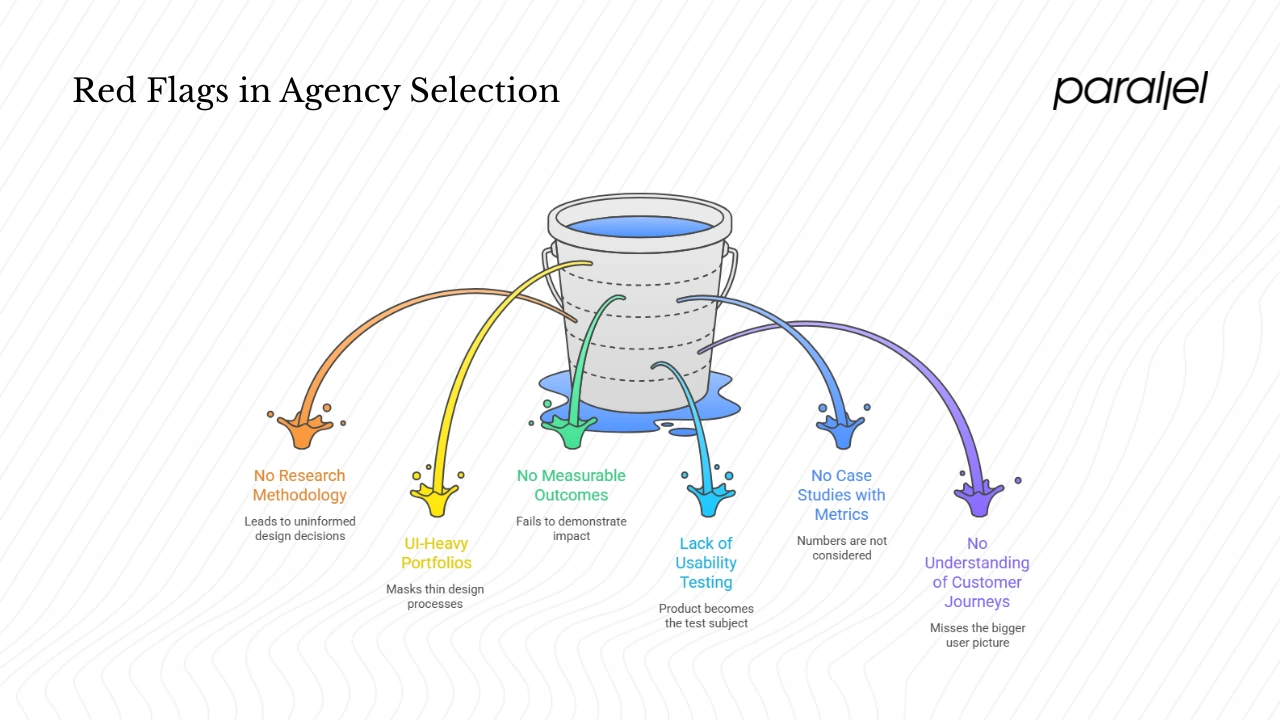
- No clear research methodology. If an agency can’t articulate how they learn from users, they may jump straight to pixels.
- Only UI‑heavy portfolios. Beautiful dribbble shots without functional results can hide thin processes.
- No measurable outcomes. A good case study should show impact—higher sign‑ups, reduced churn, or improved retention—not just images.
- Lack of usability testing evidence. If they don’t test prototypes, your product becomes the test.
- No case studies tied to metrics. Numbers matter. For example, a major e‑commerce site added $300 million by changing a register button to a continue button.
- No understanding of customer journeys. When an agency talks only about screens, they may miss the bigger picture of how users move through your product.
Why startups prefer specialised ux design agencies over general agencies
Specialised agencies live and breathe product. They think beyond marketing visuals and dive into how features work. They bring a product‑first mindset that aligns design choices with revenue, retention, and activation. They push for strong research and strategy instead of purely aesthetic deliverables. They iterate faster because they know speed matters for startups. They focus on user experience rather than advertising campaigns and often embed with product and engineering teams. For example, at Parallel we’ll spend more time interviewing customers than designing the first screen. That level of immersion leads to insights that large marketing agencies often miss. Startups value this because it reduces wasted effort and accelerates time‑to‑value.
Final thoughts: what “best” really means in UX
The search for the “best” agency is often misguided. “Best” depends on your stage, budget, product complexity, and internal design maturity. An early‑stage founder might need quick validation of assumptions; an enterprise team might need help with accessibility and governance. What matters is strategy depth, process clarity, cultural fit, and measurable outcomes. Don’t be swayed by trend‑driven visuals alone. Remember that good user experience drives retention and loyalty. Studies show that improving retention by just 5 % can increase profits by more than 25 %. Poor experience, on the other hand, can cost trillions; e‑commerce businesses lose $1.42 trillion a year from bad UX. When you pick a partner, look for someone who asks hard questions, listens to users, and works side by side with your team. In my experience, that shared understanding is what makes the difference.
Conclusion
We’ve reviewed top partners for 2026, highlighted our evaluation criteria, and provided guidance on choosing the right partner. We’ve seen that a strong experience is not decoration; it’s critical infrastructure. Investing in research, strategy, and iterative design yields measurable returns and saves months of rework. If you’re building a product, take the time to assess your current maturity. Start with user research—talk to real people, learn their motivations, and test small prototypes. Then decide whether you need an external agency to guide you. Making these decisions deliberately can mean the difference between a product people love and one that silently drives them away.
FAQ
1) What do UX design agencies do?
They specialise in improving the user experience across digital products through user research, strategy, wireframing, prototyping, interaction design, visual design, and usability testing. They help teams understand users, plan features, and validate ideas before development.
2) How much do these agencies charge?
Costs vary widely. Early‑stage startups can engage partners for focused research and prototyping, which is often more affordable. Larger engagements involving full design systems and continuous collaboration cost more. Many agencies offer tiered packages or retainers; always ask for pricing breakdowns.
3) What’s the difference between UX design and UI design?
UX defines the structure, flow, and information architecture of a product, ensuring tasks are logical and frictionless. UI deals with the visual layer—typography, color, imagery, and micro‑interactions that communicate status and hierarchy.
4) When should a startup hire a ux design agency?
Consider hiring before building an MVP to clarify assumptions; when conversions or retention drop; during a major redesign; or when scaling from MVP to a more mature product. Early guidance reduces costly rework later.
5) How do ux design agencies work with developers?
Good agencies collaborate closely with engineering, sharing design systems, interactive prototypes, and clear documentation. They involve developers early to ensure feasibility and stay involved during implementation.
6) Are ux design agencies worth it for early‑stage startups?
Yes, provided they emphasise research and strategy rather than just visuals. Investing up front saves time and money later. Poor experience drives users away, and fixing issues after launch is expensive.
7) What deliverables should I expect from a ux design agency?
Deliverables typically include research reports, customer journey maps, information architecture diagrams, wireframes, interactive prototypes, high‑fidelity designs, and usability testing findings. These artefacts help ensure alignment and reduce ambiguity during development.

check out these related blogs















































.avif)